Aircraft & Exhibits Archive - Page 4 of 9 - NNAM

Archives: Aircraft & Exhibits

<p>Best Aircraft & Exhibits</p>

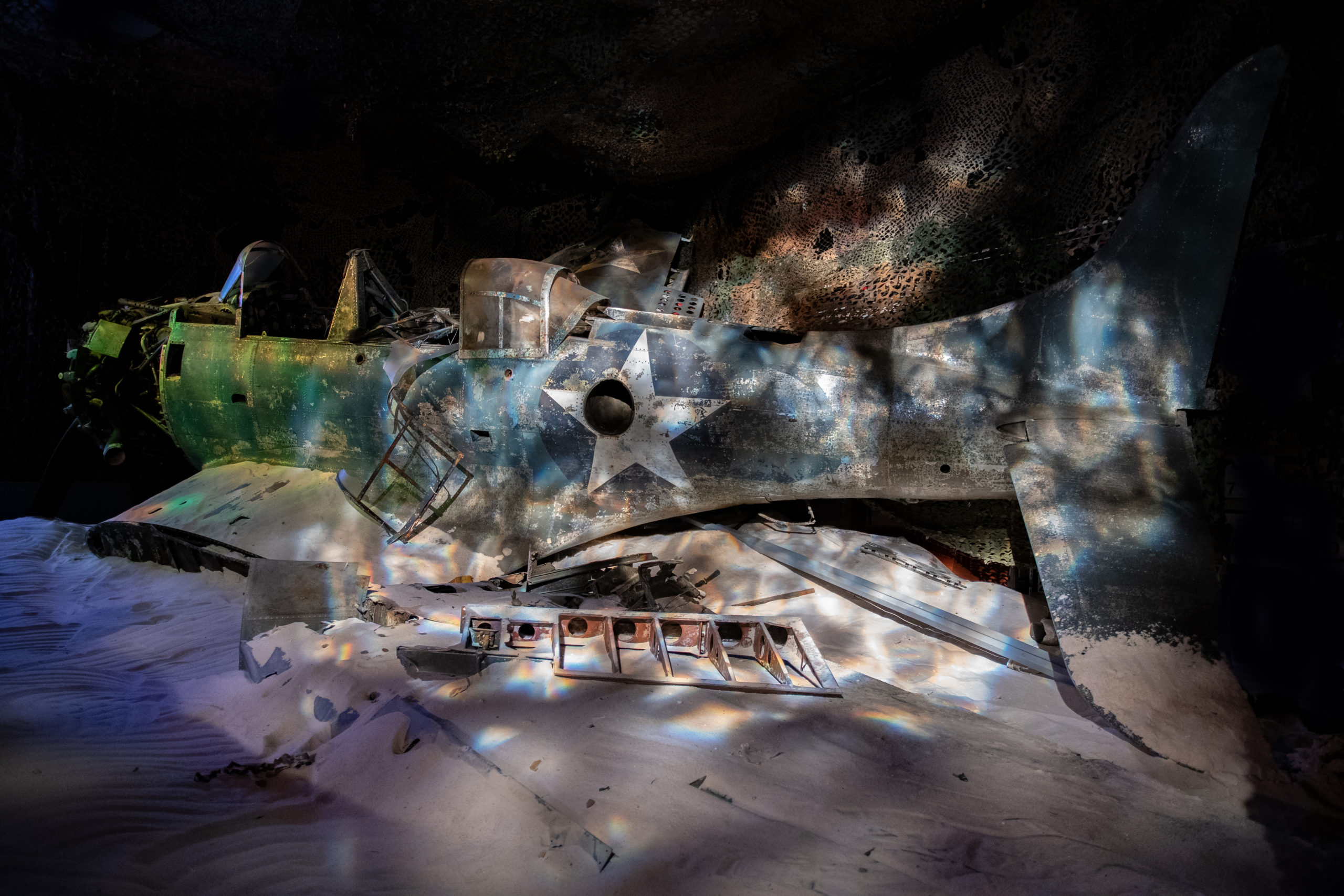
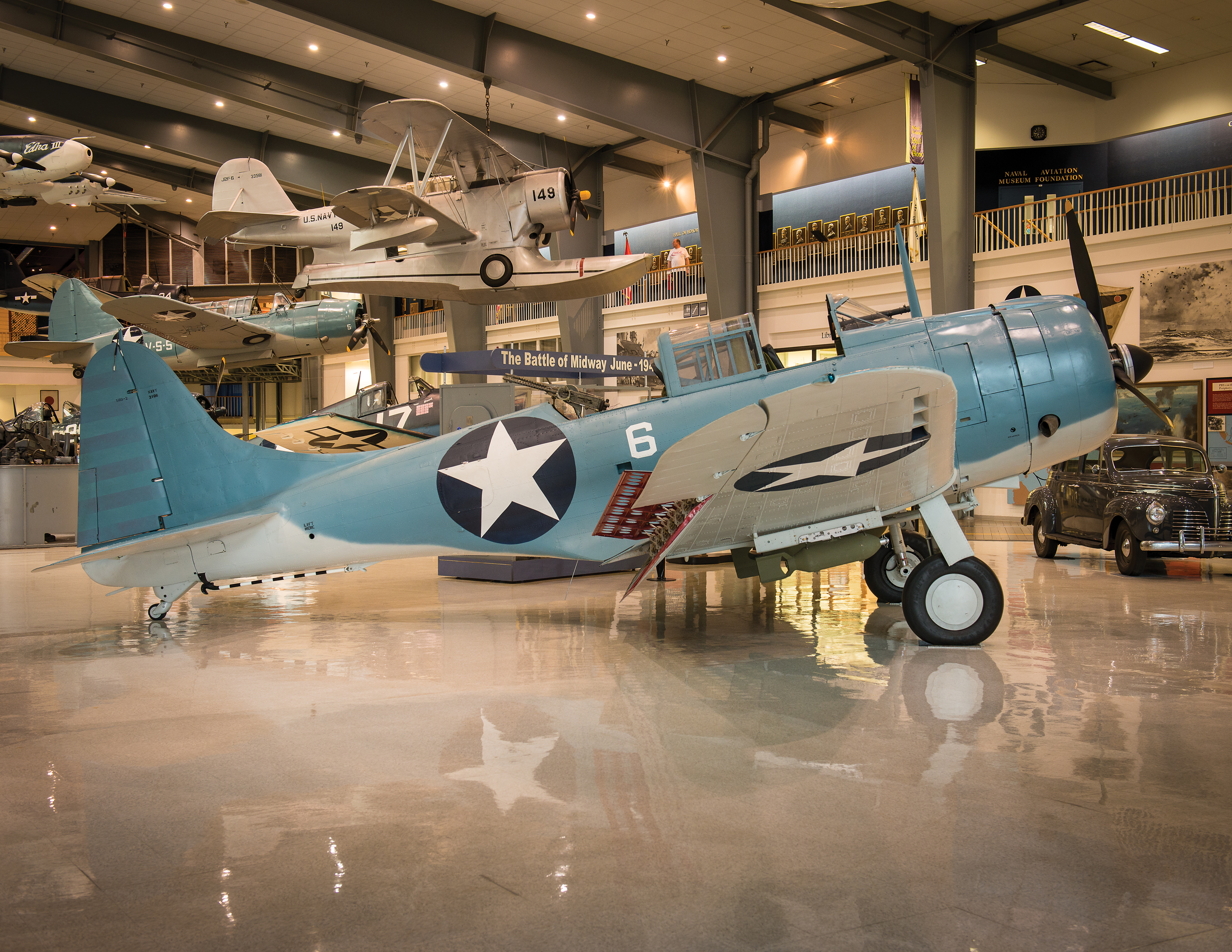
SBD-2 Dauntless

The museum’s Dauntless is one of the most historically significant aircraft in the collection.  It survived Pearl Harbor and attacked Japanese shipping in New Guinea while flying from USS Lexington (CV 2) on March 10, 1942.  The lone remaining airplane to have participated in the Battle of Midway in June 1942, it returned from an SBD-2 Dauntless

F6F-3 Hellcat

The Navy’s front-line fighter during the final two years of World War II, the F6F produced more aces, including leading Navy ace Commander David McCampbell, than any other Allied aircraft.  At peak production the airplane’s manufacturer delivered one Hellcat an hour around-the-clock.  The aircraft on display is a combat veteran of the Solomon Islands campaign F6F-3 Hellcat

FG-1D Corsair

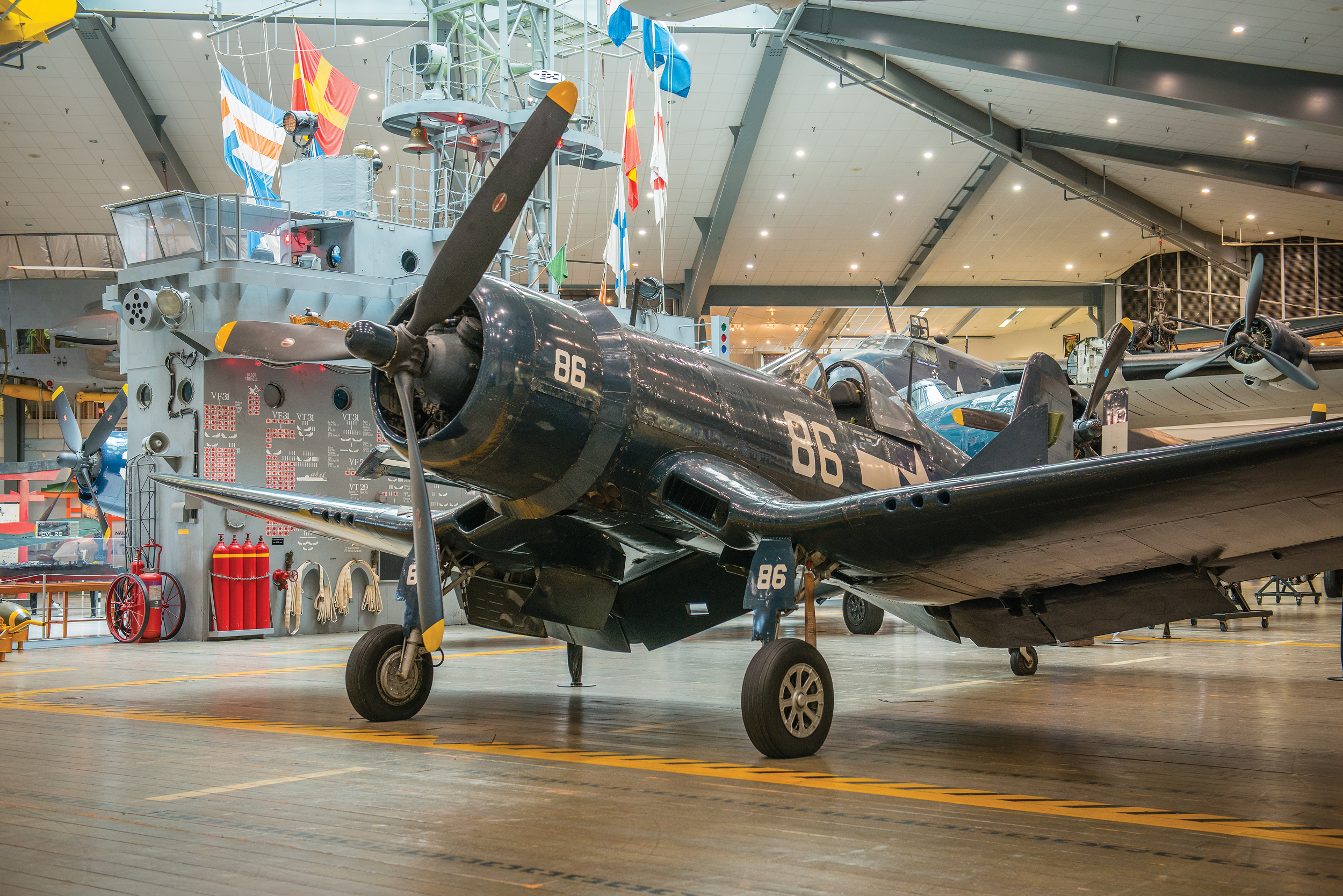
Originally produced by Vought, the Corsair was in production by multiple manufacturers longer than any piston-engine fighter and flew combat missions in both World War II and Korea.  Its most recognizable design feature was an inverted gull wing that was necessary to keep the blades of its 13-ft. propeller from striking the ground.  During air FG-1D Corsair

TBM-3E Avenger

Nicknamed the “Turkey,” the Avenger entered service at the Battle of Midway and was the largest airplane assigned to fly from carriers during World War II.  This was the type airplane flown by future President of the United States George H.W. Bush during his World War II service as a Naval Aviator.  In one of TBM-3E Avenger

PB2Y-5R Coronado

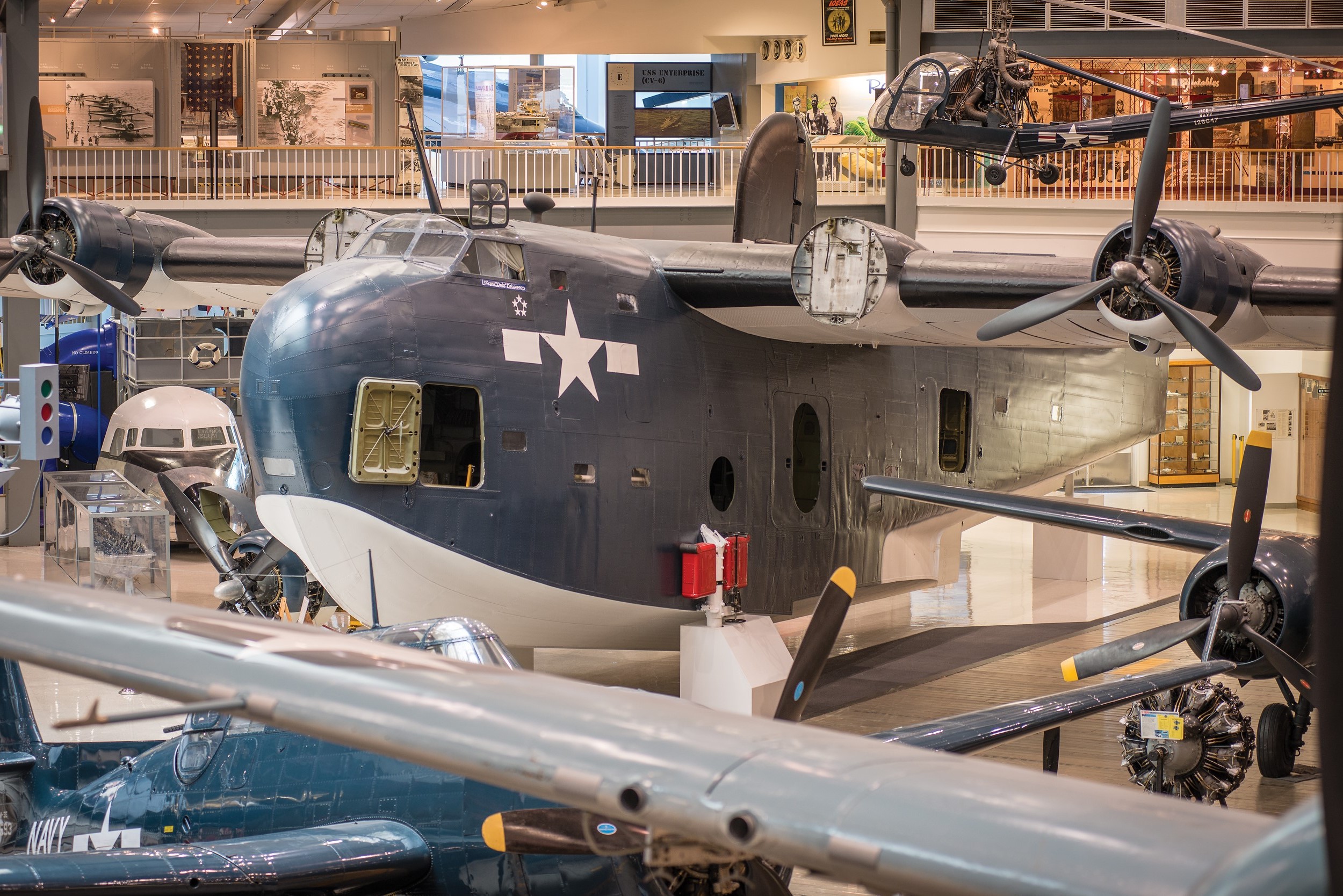
The museum’s airplane is one of a select number of Coronado flying boats used by high-ranking officers and features a plush interior and all of the conveniences possible in an airplane of the era.  This airplane transported members of Fleet Admiral Chester W. Nimitz’s staff to the surrender ceremonies ending World War II, becoming one PB2Y-5R Coronado

USS Cabot (CVL 28) Flight Deck

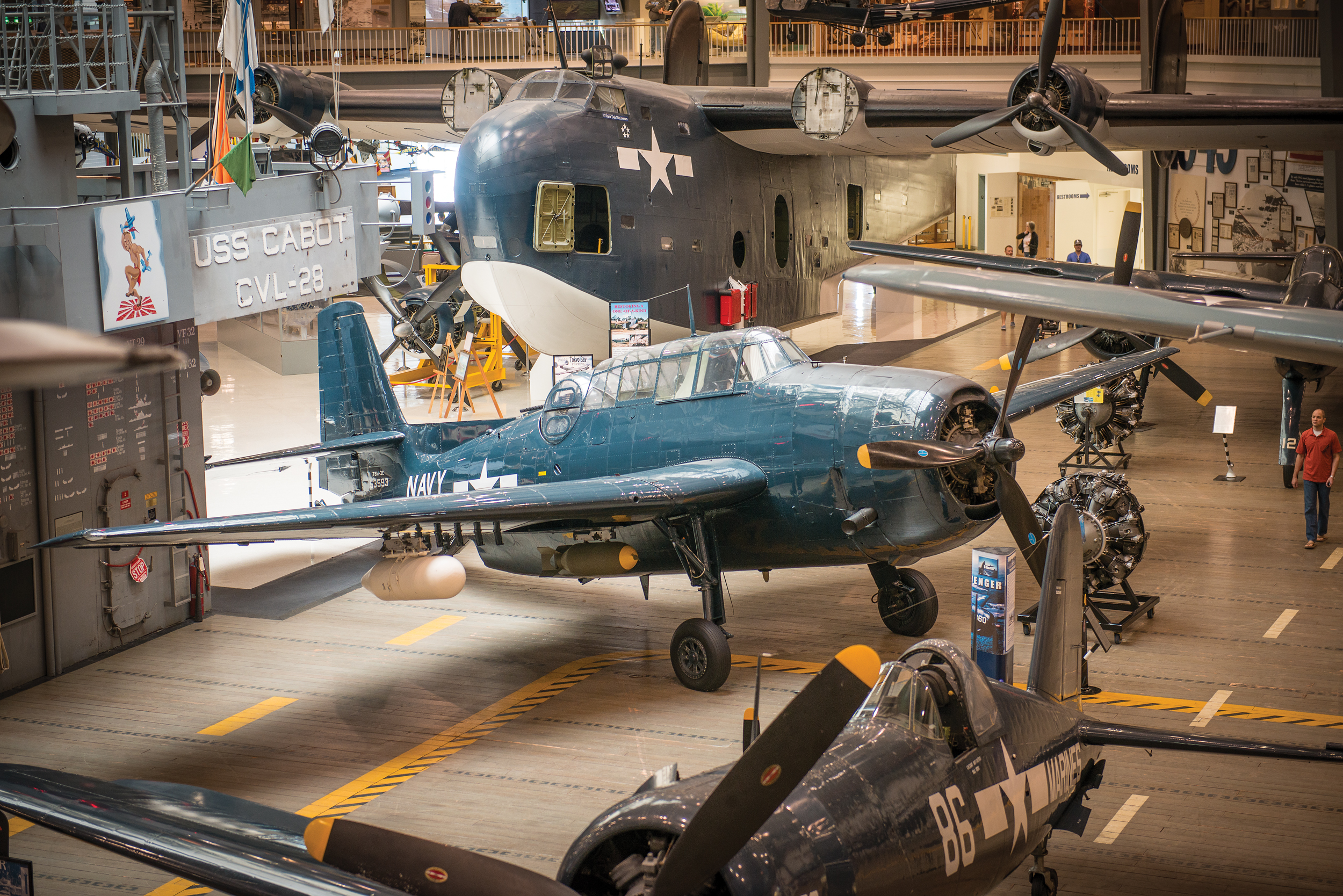
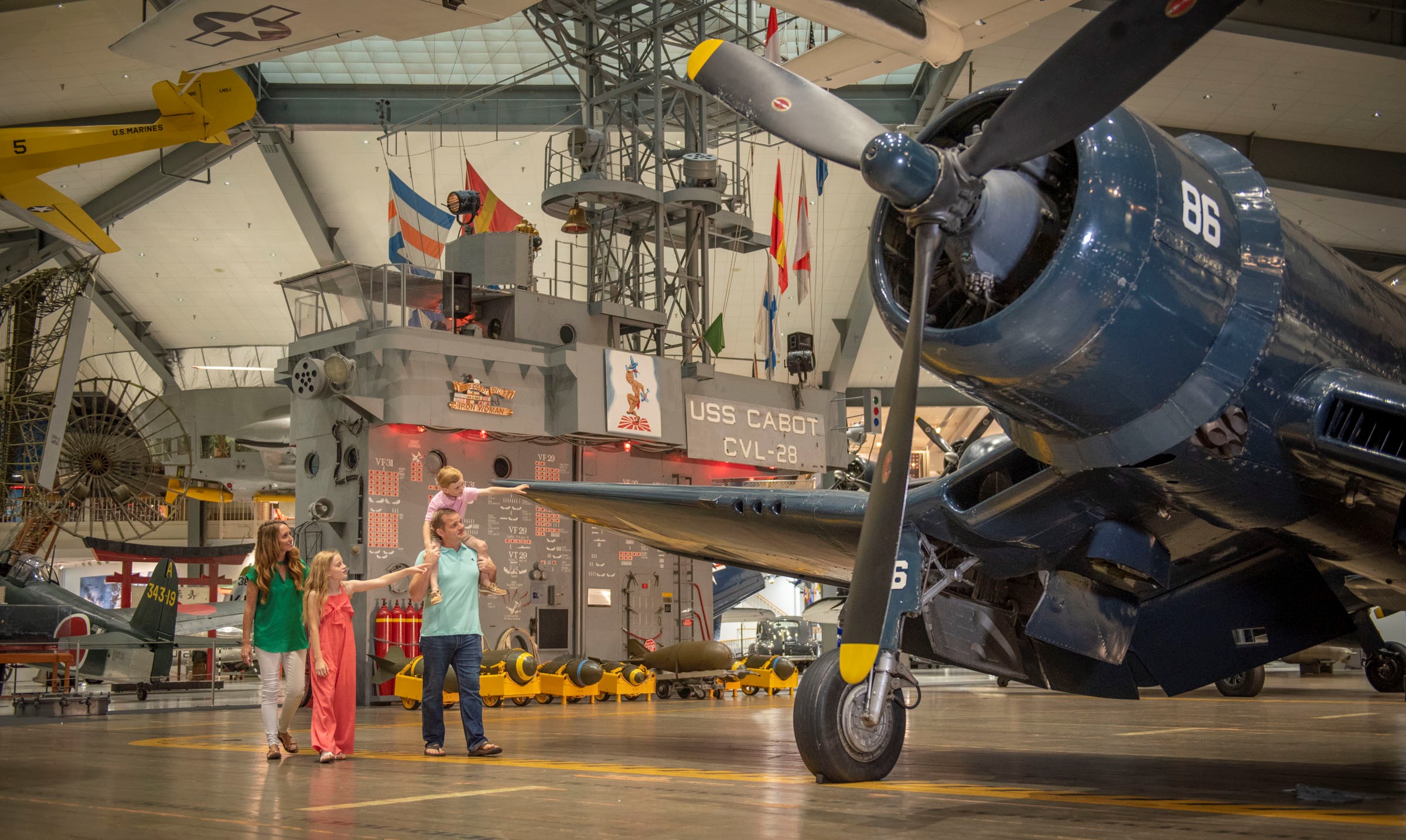
This exhibit depicts the decorated light carrier USS Cabot (CVL 28) and includes a replica of the wooden flight deck and island superstructure.  Assisted by his son, the same sailor who painted the original scoreboard highlighting the combat record of the ship and its embarked air groups duplicated his work for the museum.  Famed war USS Cabot (CVL 28) Flight Deck

Underwater Treasures of Lake Michigan

The museum began recovering aircraft from the bottom of Lake Michigan, where they crashed during World War II carrier qualification, in the early 1990s.  This exhibit takes visitors to the depths, preserving an F4F Wildcat and SBD Dauntless in the conditions in which they were found after spending decades underwater.  A short film produced exclusively Underwater Treasures of Lake Michigan

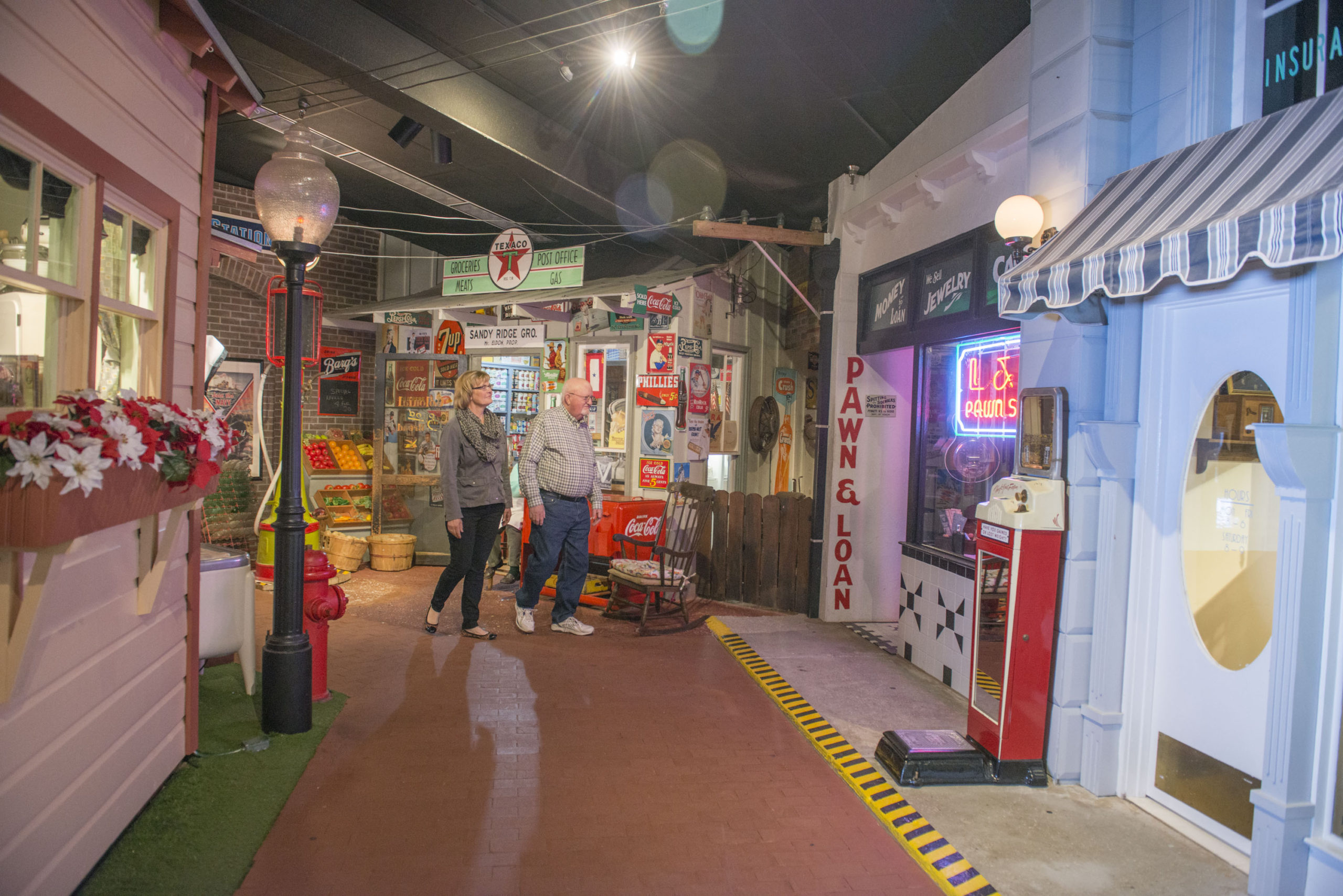
Home Front U.S.A.

The first of a series of dioramas depicting the World War II experience paints a portrait of life on the home front where rationing and scrap drives were a part of normal life.  Many of the businesses represented are actual establishments from Pensacola in that era, and a number of the “Hometown Heroes” whose pictures Home Front U.S.A.

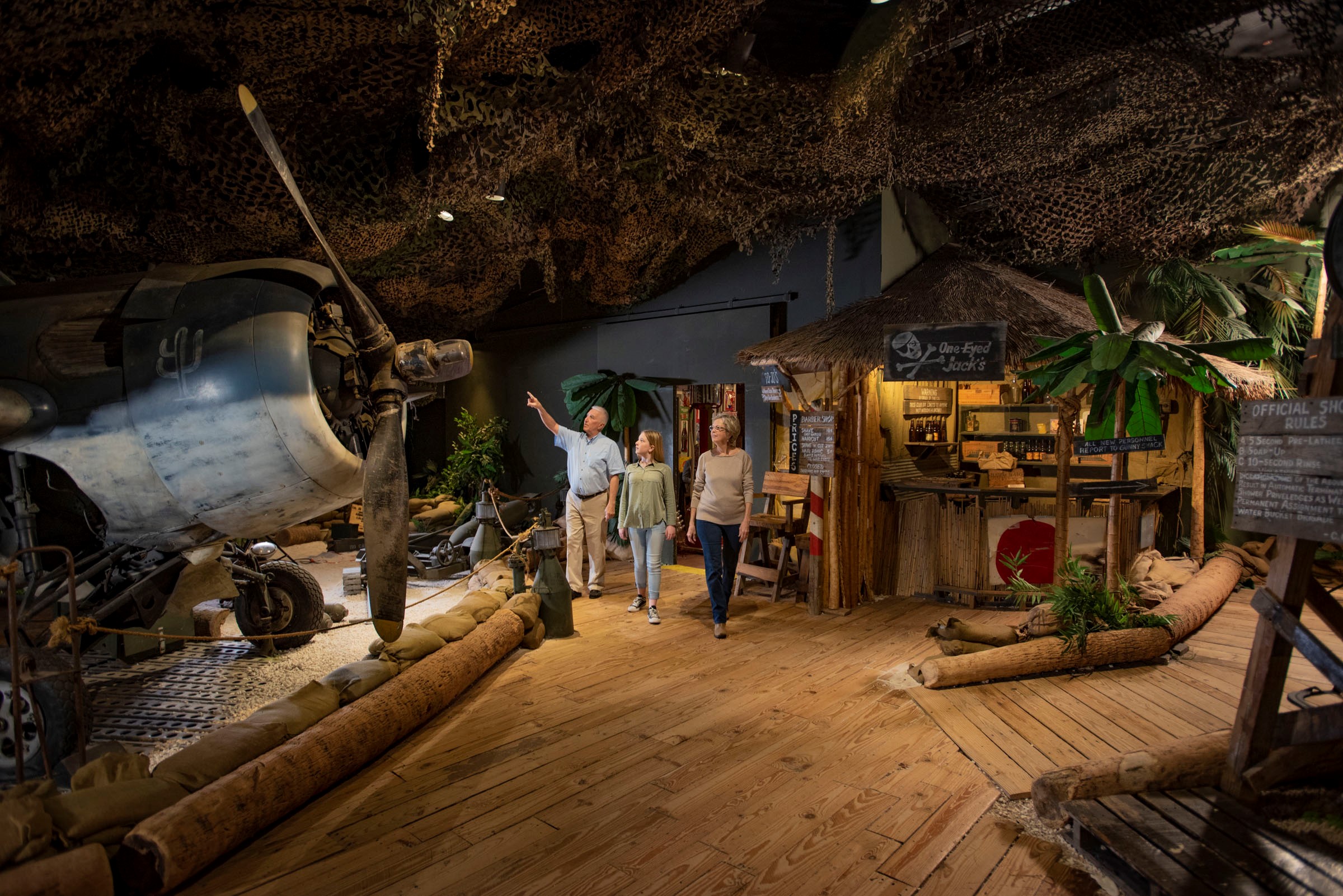
Pacific Island

Stepping through the facade of the U.S. Navy Recruiting Station, visitors leave Home Front U.S.A. and find themselves at a Pacific island airfield with an FM-2 Wildcat fighter as its centerpiece.  From rustic tent living quarters to an oil barrel shower to the ubiquitous sign showing the distance to Tokyo and places back home, the Pacific Island

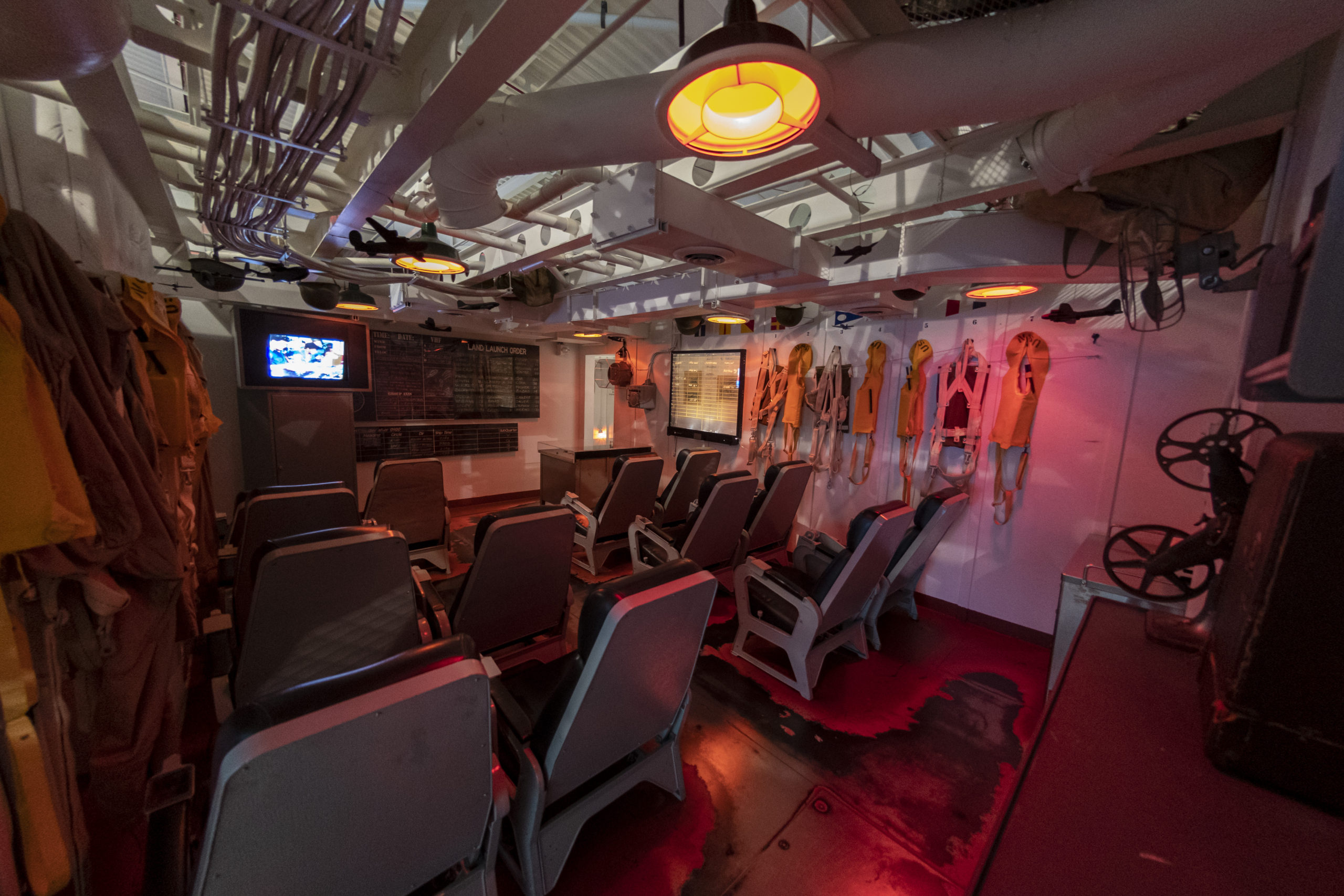
Life on an Aircraft Carrier

The final element of the World War II diorama takes visitors through the passageways of a wartime carrier to include the sounds of circulated air, pounding hammers and the high-pitched bosun’s pipe.  Shipboard spaces include the ready room where aviators received briefings on their missions, the all-important parachute loft and the gedunk, the naval term Life on an Aircraft Carrier