Aircraft & Exhibits Archive - Page 5 of 9 - NNAM

Archives: Aircraft & Exhibits

<p>Best Aircraft & Exhibits</p>

USS Enterprise Exhibit
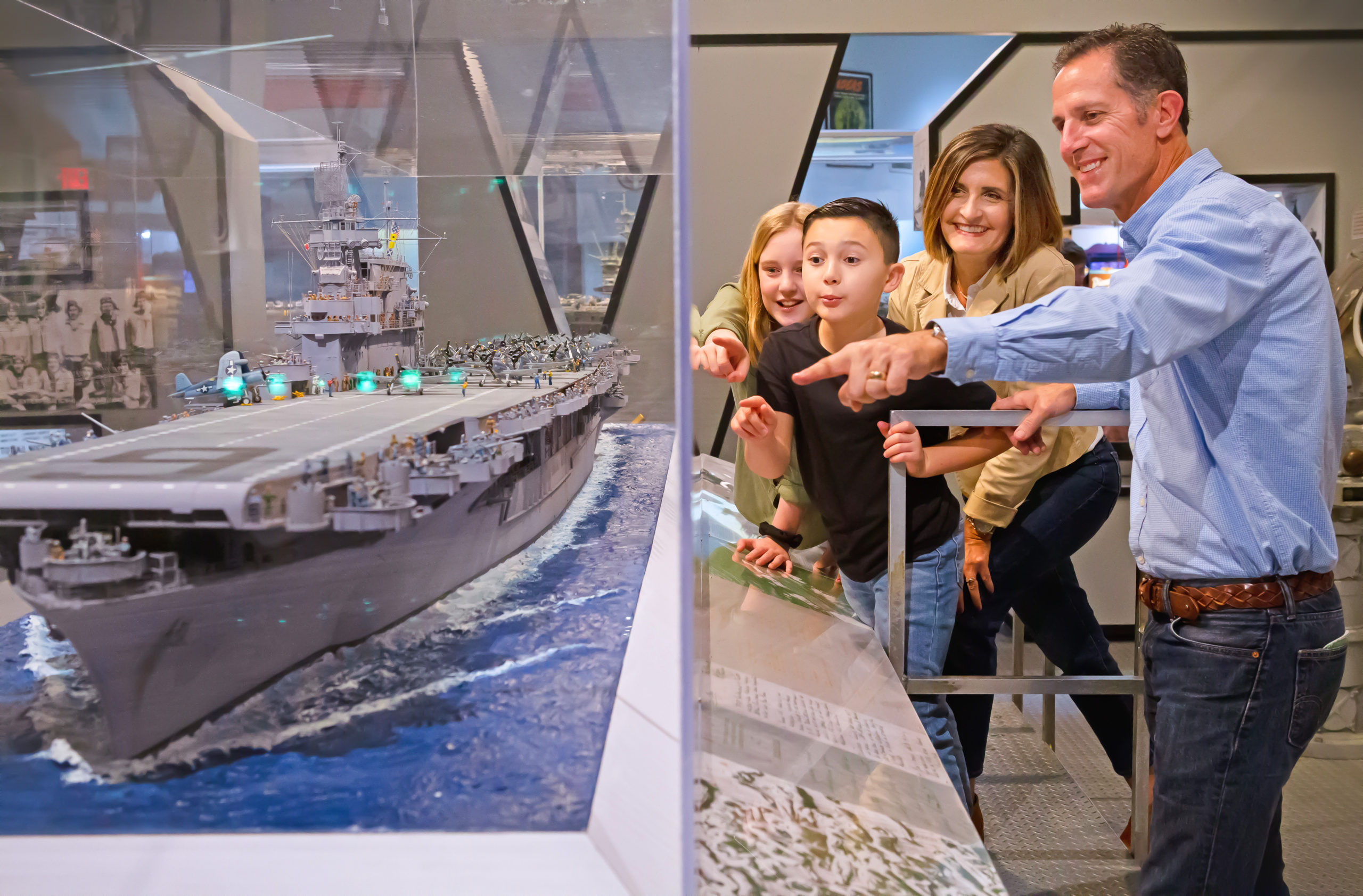
The most decorated ship of World War II, USS Enterprise (CV 6) fought in nearly every significant battle of World War II.  The exhibit devoted to her history features original components from the ship and a highly detailed model depicting the aircraft carrier during the Battle of the Philippine Sea in June 1944.  A flag USS Enterprise Exhibit

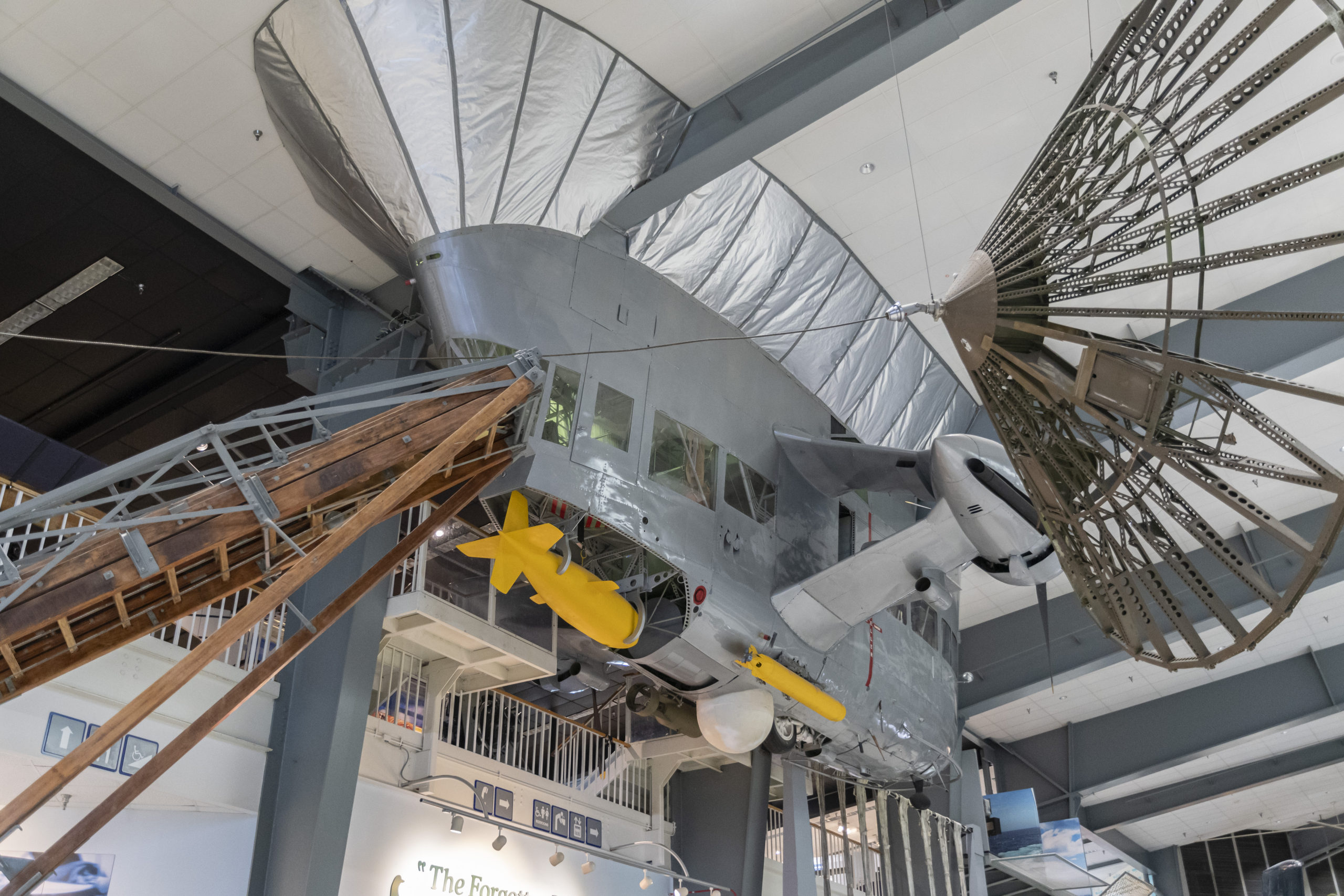
K-Class Control Car

Blimps provided an effective way to combat enemy submarine attacks against convoys because they could remain airborne much longer that conventional aircraft.  On only one occasion did a K-class airship engage an enemy submarine, the crew of a German U-boat shooting it down with a deck gun.  Museum staff located the control car in a K-Class Control Car

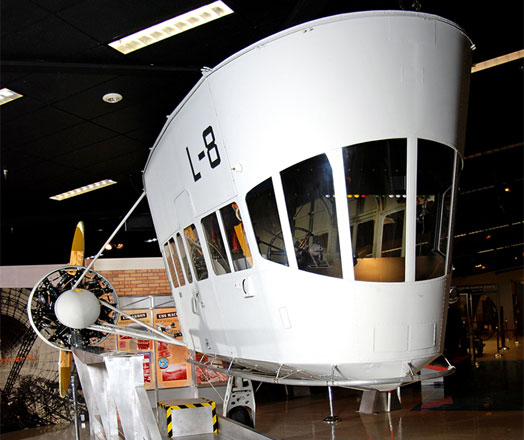
L-8 Control Car

Procured from Goodyear to support the expansion of Naval Aviation’s airship fleet, the L-8 delivered vital parts to USS Hornet (CV 8) after the carrier departed California carrying the Doolittle Raiders and their aircraft for their famous raid on Tokyo.  The L-8’s most famous flight inspired the nickname Ghost Ship, the blimp with the control L-8 Control Car

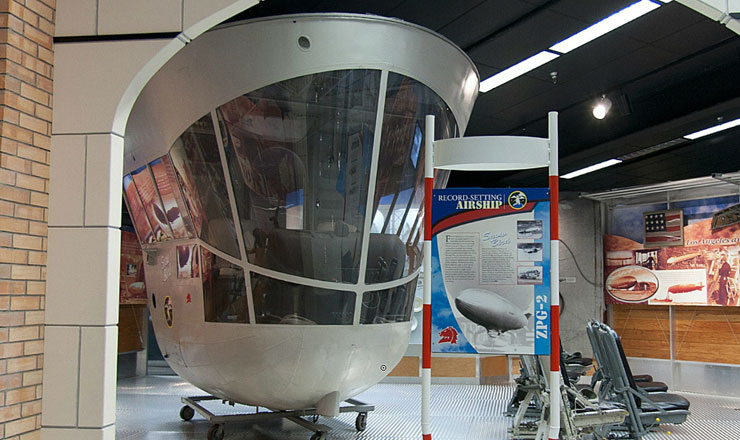
ZPG-2 Snow Bird

The museum displays the cockpit section of the ZPG-2 Snow Bird,  which on March 15, 1957, established a long-distance unrefueled flight record when it landed at Naval Air Station Key West, Florida, after traveling a distance of 9,448 miles.  During the flight, it spent 264.2 hours straight in the air.  President Dwight D. Eisenhower presented ZPG-2 Snow Bird

FH-1 Phantom

The initial design for the FH-1 Phantom featured three small jet engines on each wing before finalization of the twin-engine design.  The airplane was the Navy’s first operational jet and made its maiden flight on January 26, 1945.  In May 1948, VF-17A flew the aircraft in operations on board USS Saipan (CVL 48), becoming the first carrier-qualified FH-1 Phantom

F2H-2P Banshee

The Banshee received its nickname because of the wailing sound that its engine made.  Both fighter and photoreconnaissance versions of the airplane flew in Korea, the latter one like that displayed in the museum featuring a longer nose to house cameras.  Filled with concrete, the airplane on display was once a fixture at a children’s F2H-2P Banshee

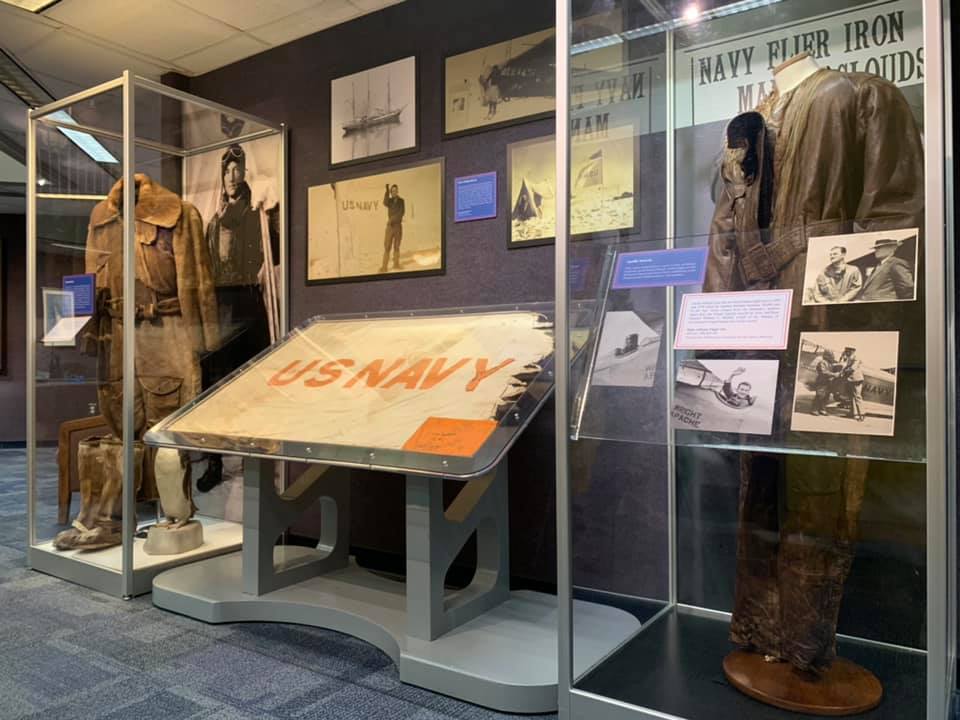
Apollo: The Path to the Moon and Beyond

Opened on the 50th anniversary of man first walking on the moon, this exhibit located in the museum’s Emil Buehler Naval Aviation Library tells the story of Naval Aviation’s spirit of exploration.  Highlights include artifacts from record-breaking flights and famed polar explorer Rear Admiral Richard Byrd.  Also included is the story of Naval Aviator astronauts Apollo: The Path to the Moon and Beyond

A-4E/F Skyhawk

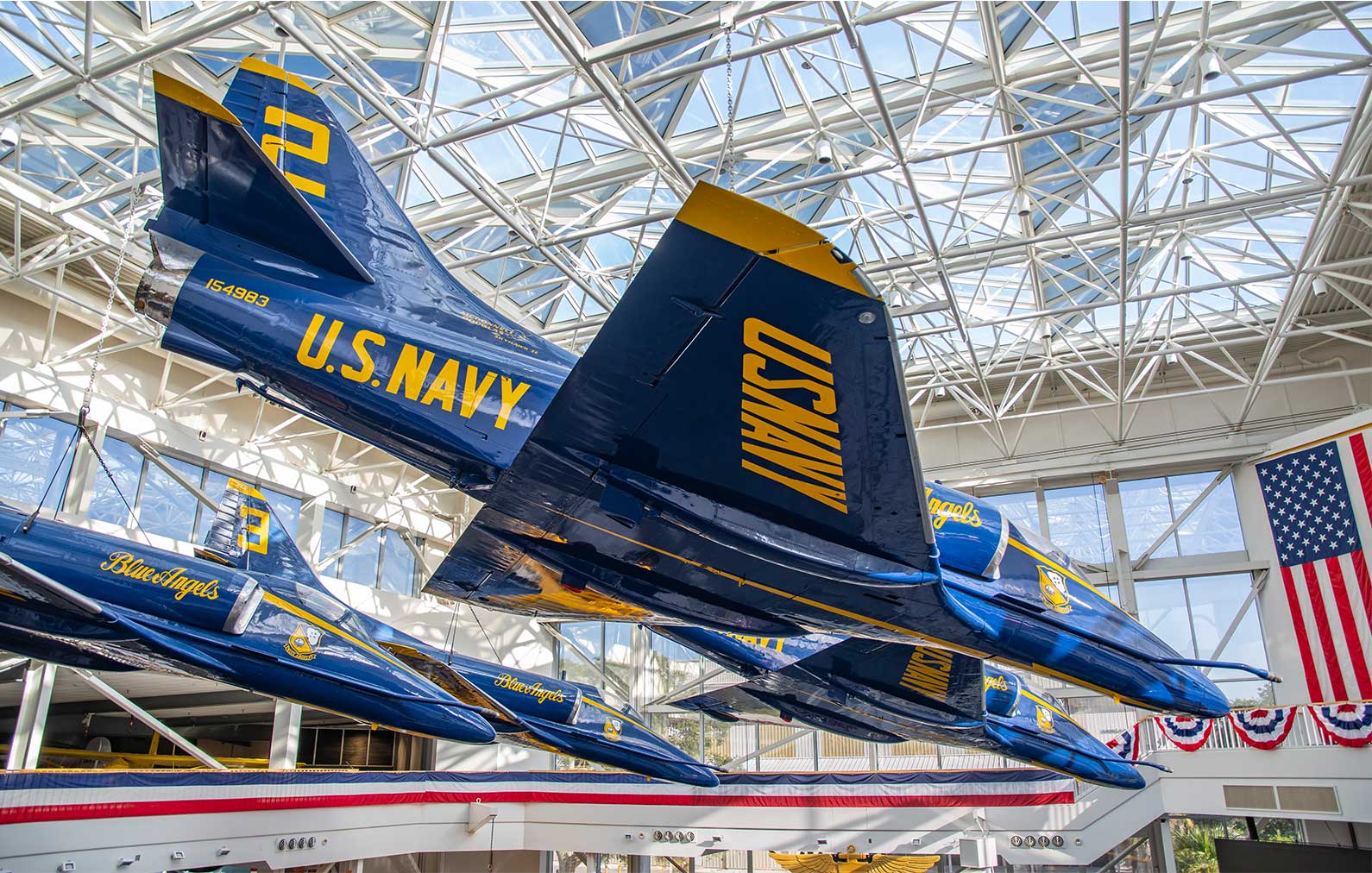
Soaring in the famous diamond formation of the Blue Angels are four A-4 Skyhawks, the type airplane flown by the U.S. Navy Flight Demonstration Squadron from 1974 to 1986.  In actual practice the aircraft fly closer than the display represents with just 36 inches separating the airplanes as they roar through the sky.  In fleet A-4E/F Skyhawk

SNJ-5C Texan

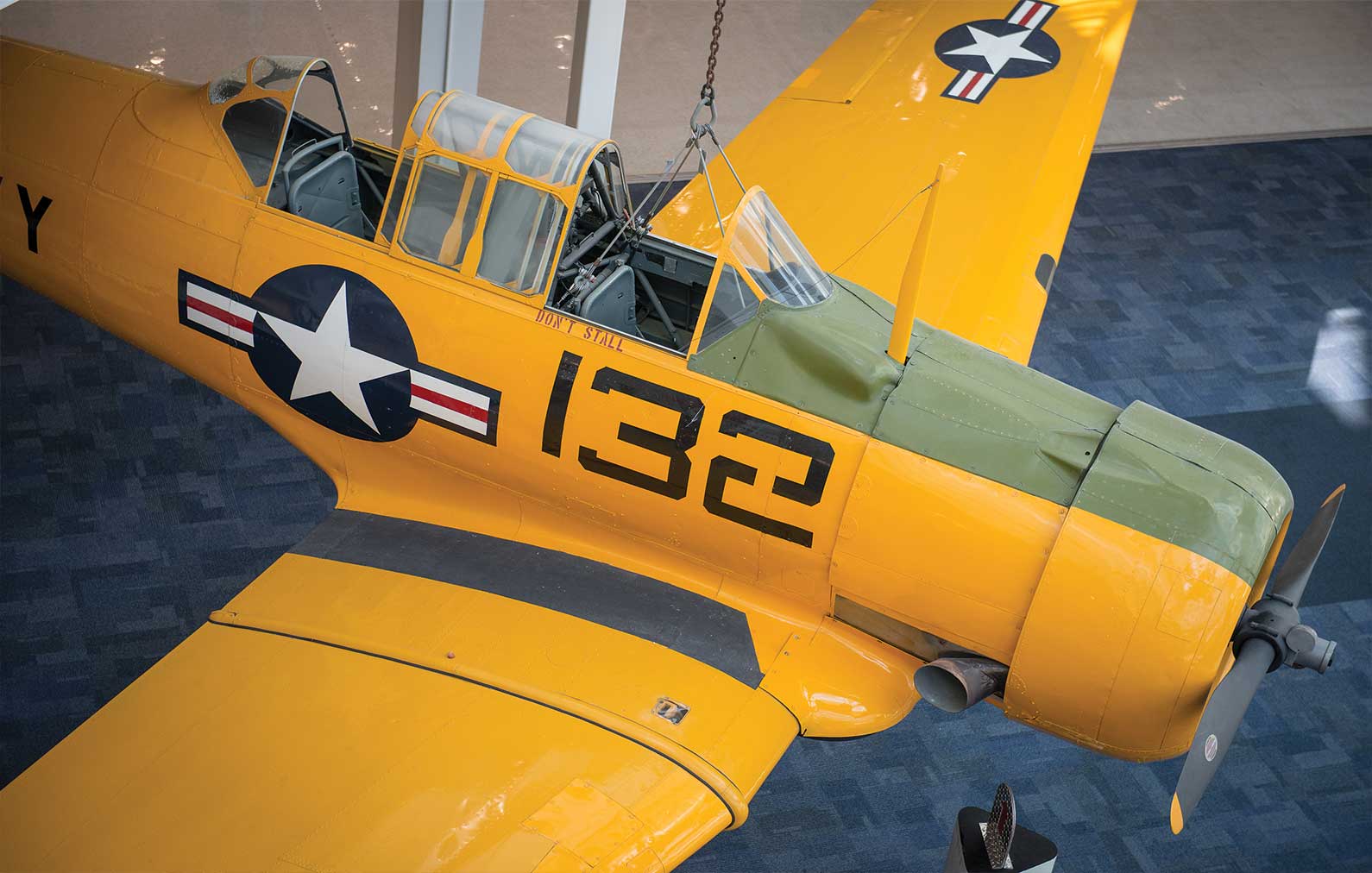
An advanced trainer in World War II and primary trainer in the postwar era, the SNJ played a role in instructing thousands of Naval Aviators.  The version on display featured a tailhook for use in carrier qualification where students made their initial arrested landings on an aircraft carrier.  Among those who flew a Texan in SNJ-5C Texan

N2S-3 Kaydet

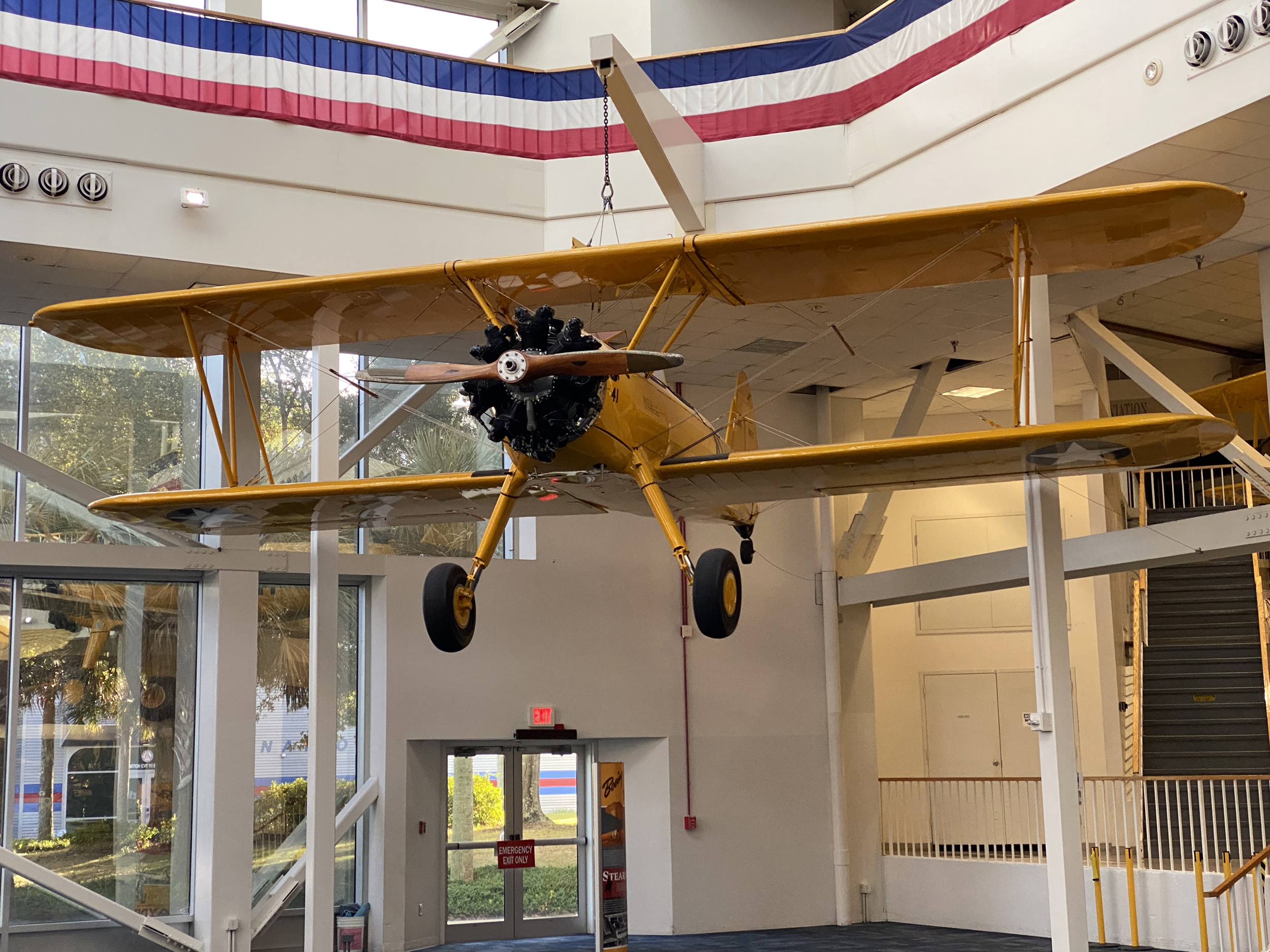
Though nicknamed the Kaydet, the airplane was universally called the Stearman after its manufacturer and served as a primary trainer for the both the Navy and Army Air Forces. This particular airplane served for a time at Naval Air Station Minneapolis, Minnesota, where in January 1943, future President George H.W. Bush made two flights in N2S-3 Kaydet