Aircraft & Exhibits Archive - Page 3 of 9 - NNAM

Archives: Aircraft & Exhibits

<p>Best Aircraft & Exhibits</p>

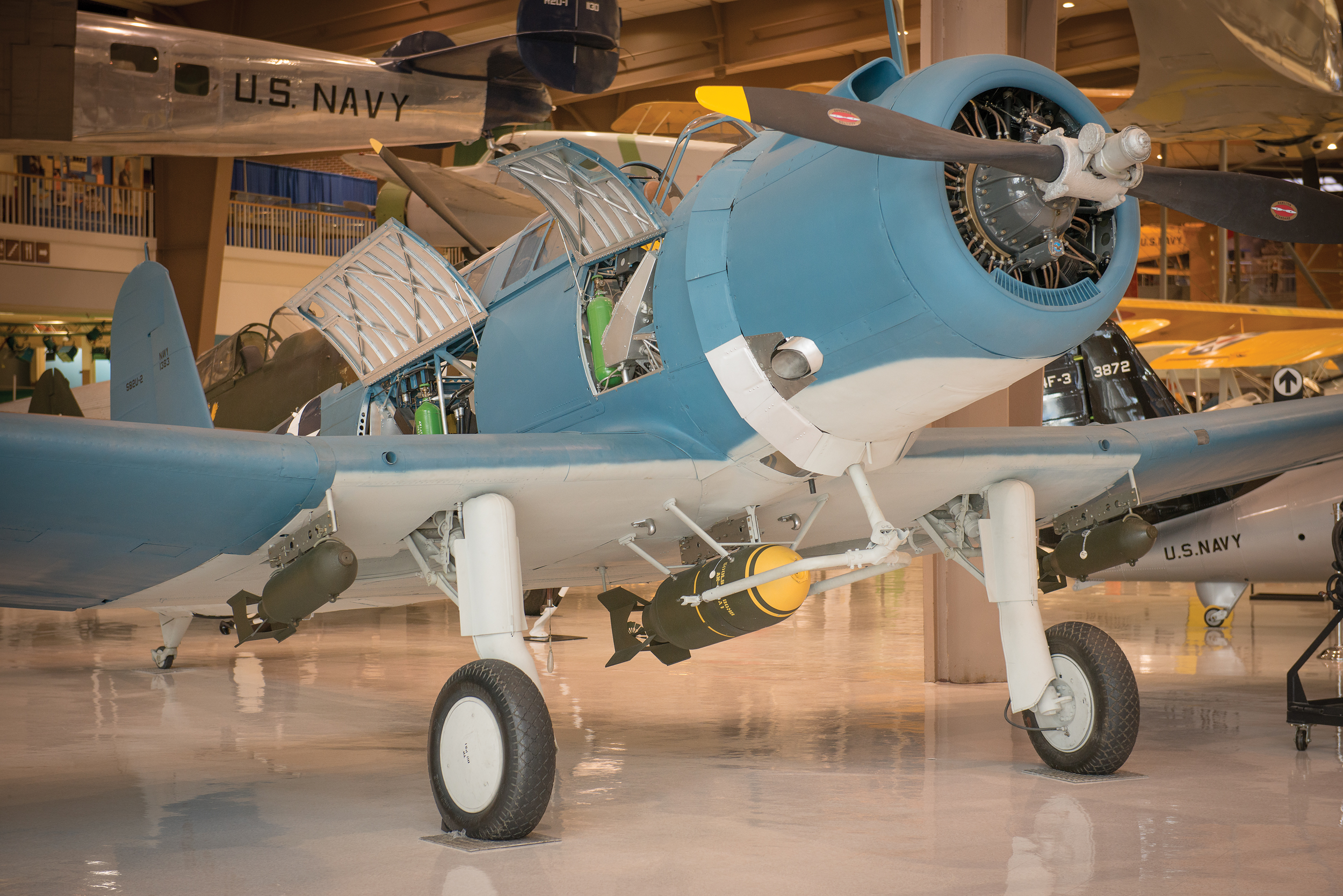
SB2U-2 Vindicator

The SB2U represented one of the major developments in aircraft design before World War II — the shift from biplanes to monoplanes.  Despite this advancement, it was a transitional design, most of its surfaces covered in fabric.  The airplane on display is the only example of the Vindicator in existence and was recovered from Lake SB2U-2 Vindicator

F4F-3 Wildcat

The Navy’s front-line fighter for the first part of World War II, the Wildcat flew in the landmark battles at Coral Sea, Midway and Guadalcanal, with eight F4F pilots receiving the Medal of Honor.  A unique design feature of the airplane was the fact that the pilot had to retract the landing gear himself by F4F-3 Wildcat

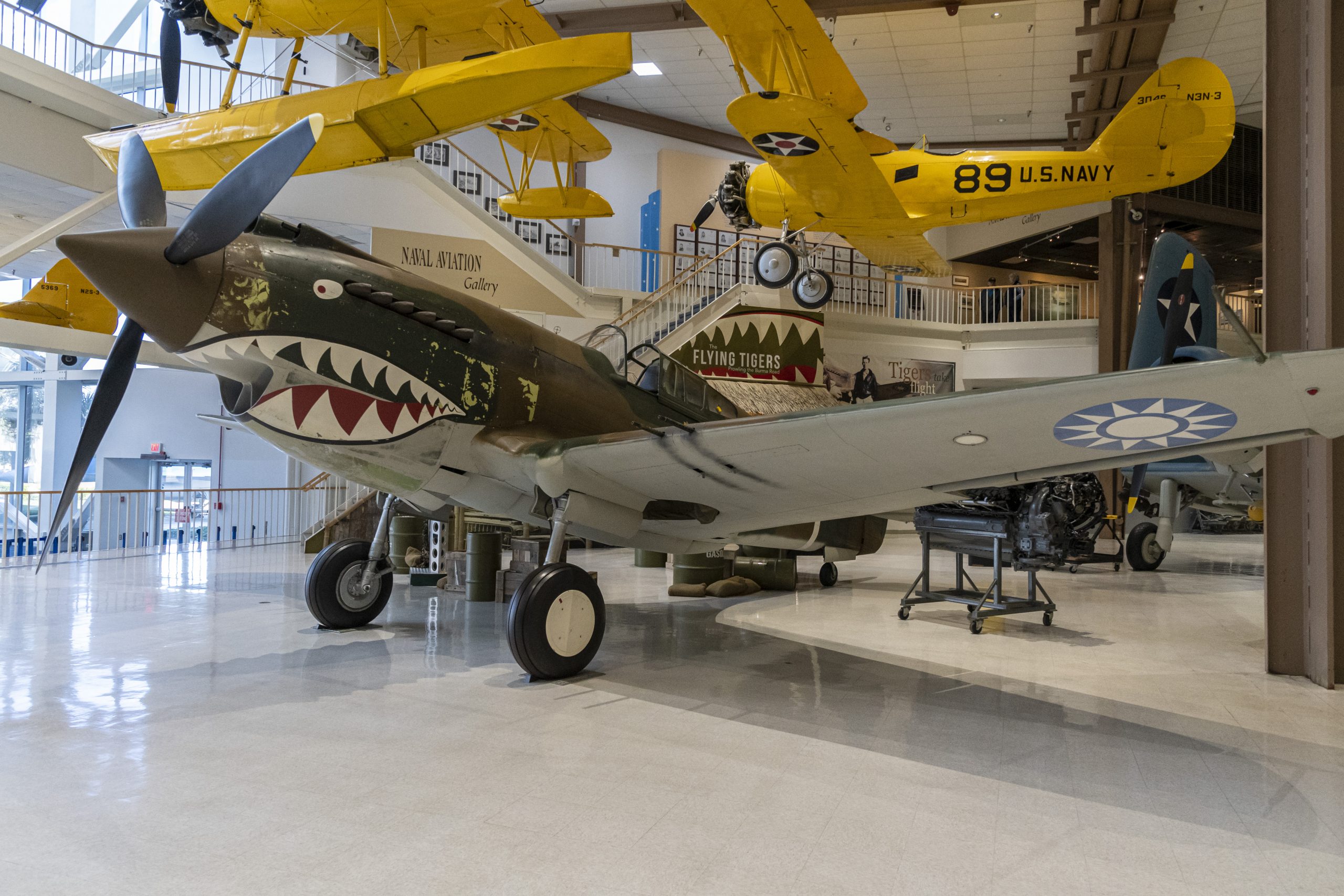
Prowling the Burma Road: The Flying Tigers

Its centerpiece a P-40B Tomahawk fighter with the famous shark mouth on its cowling, this exhibit tells the story of the American Volunteer Group (AVG), its members recruited from the ranks of the U.S. military.  Called the Flying Tigers, they were contract pilots of a private company and paid by the Chinese government to fight Prowling the Burma Road: The Flying Tigers

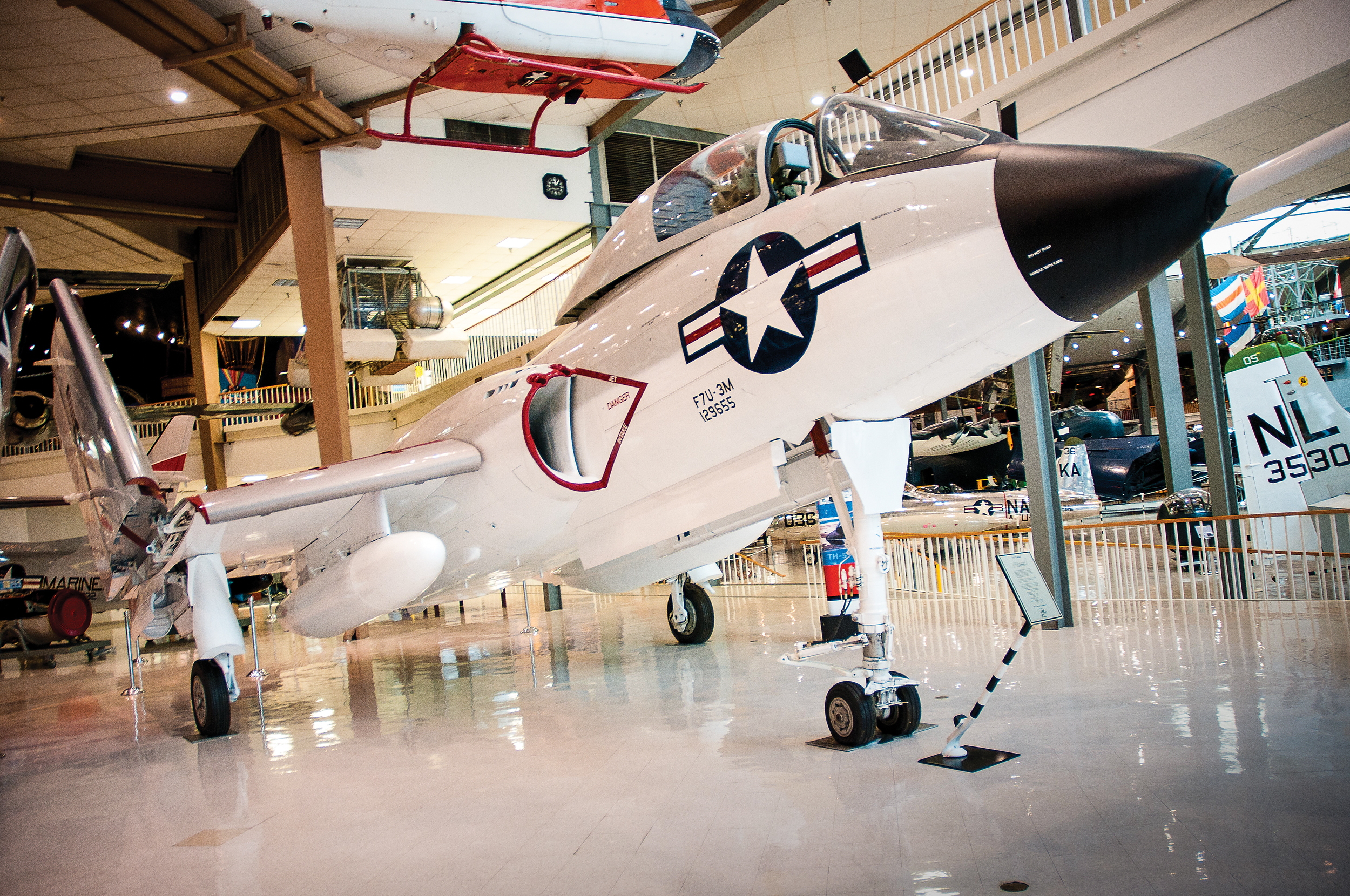
F7U-3M Cutlass

One of the unique airplanes in Naval Aviation history, the Cutlass featured a tailless design, the vertical stabilizers positioned on the wings.  One of the airplane’s major faults was that it was underpowered, prompting the nickname “Gutless Cutlass.”  The Blue Angels evaluated it as a possible air show aircraft, wisely turning it down.

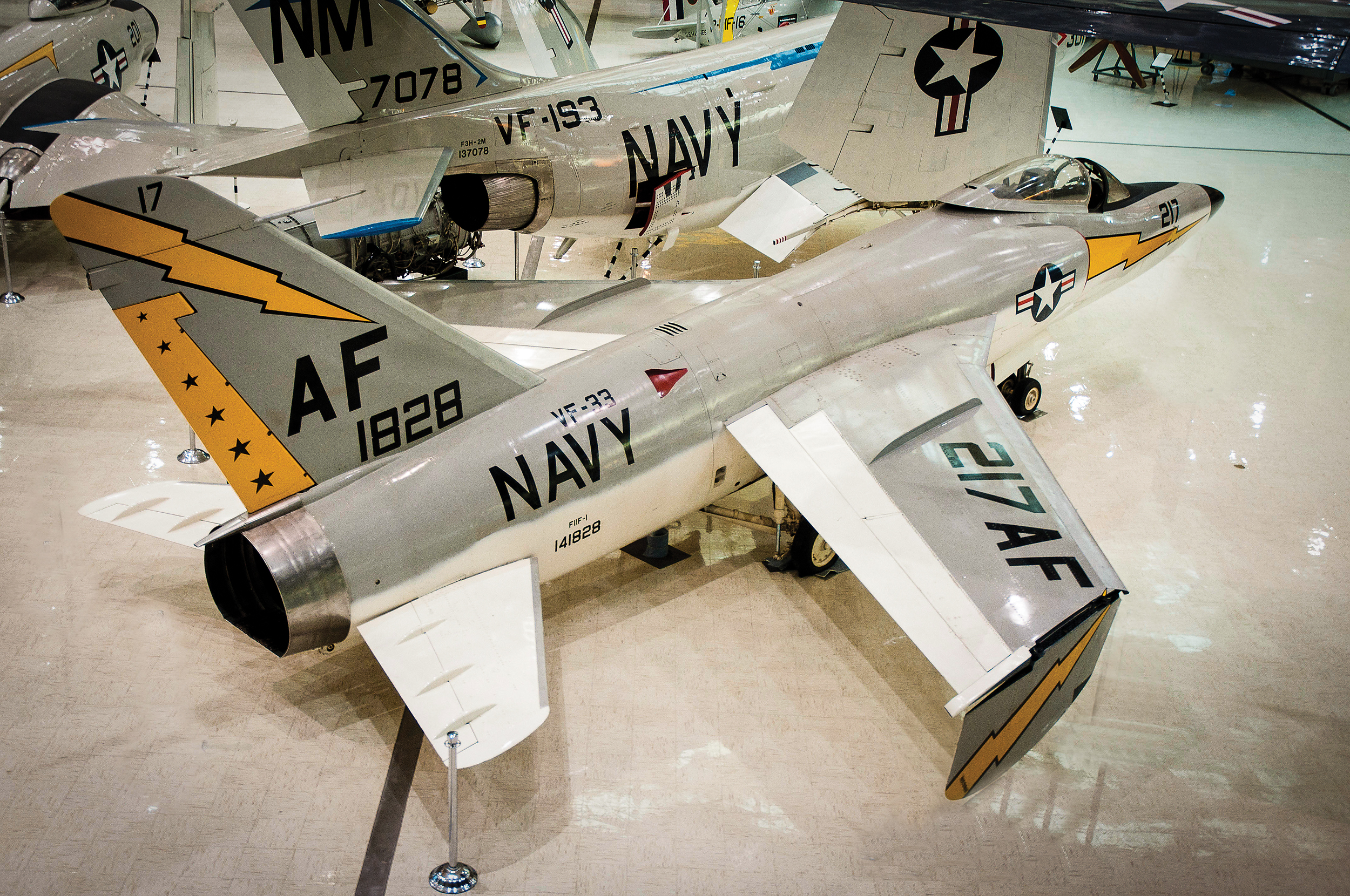
F11F-1 Tiger

The fuselage of the F11F-1 was a so-called Coke bottle design, bending inward over the wings to improve airflow in high-speed flight.  A civilian test pilot once shot himself down during a flight in a Tiger, the jet intakes ingesting spent shell casings after he fired the guns, damaging the engines.  The Tiger on display F11F-1 Tiger

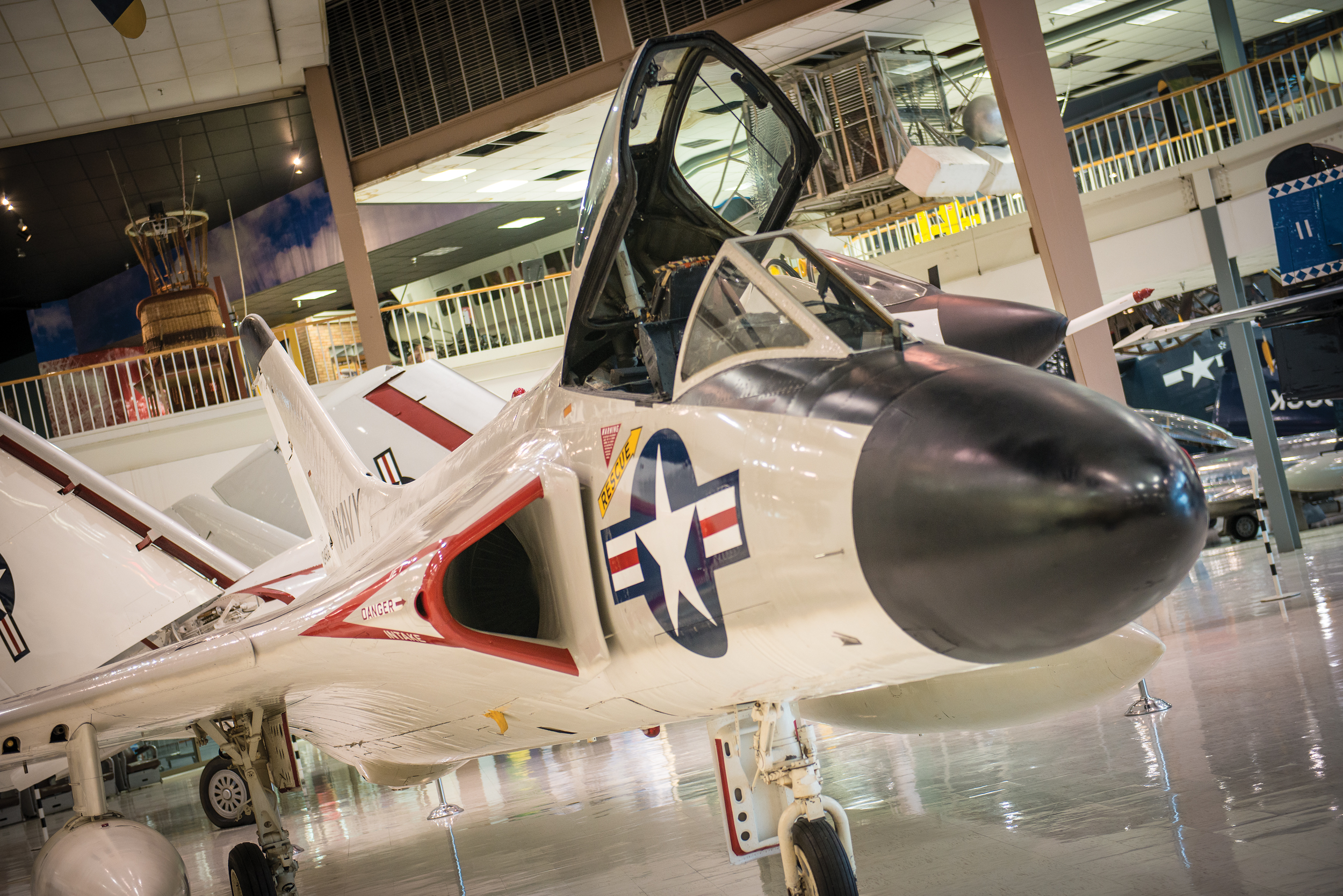
F4D-1 Skyray

The Skyray had an appropriate nickname; when viewed from above the shape of its rounded delta wing resembled a stingray. Pilots called it the “Ford” based on its F4D designation.  The airplane boasted a rapid climb rate, which prompted its use in an experimental project investigating launching a satellite using a rocket fired from an F4D-1 Skyray

Skylab Command Module

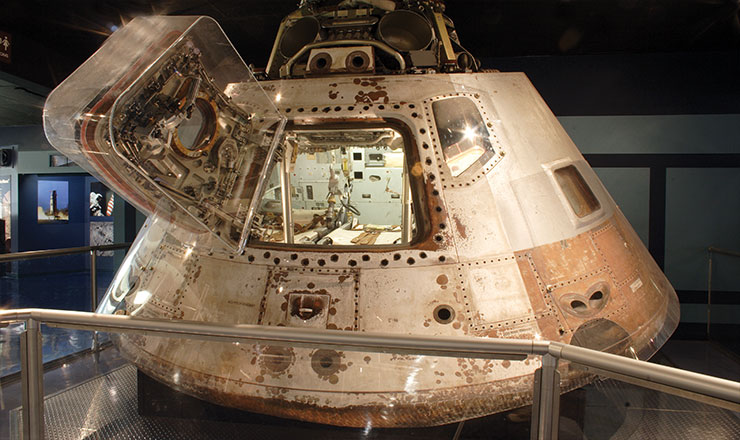
Before the modern International Space Station, a laboratory known as Skylab orbited the earth during the period 1973–1979.  The museum displays the command module that carried an all-Navy crew consisting of astronauts Pete Conrad, Paul Weitz and Joseph Kerwin to Skylab, where they spent 28 days in orbit during May–June 1973.  This spacecraft is on Skylab Command Module

B-25J Mitchell

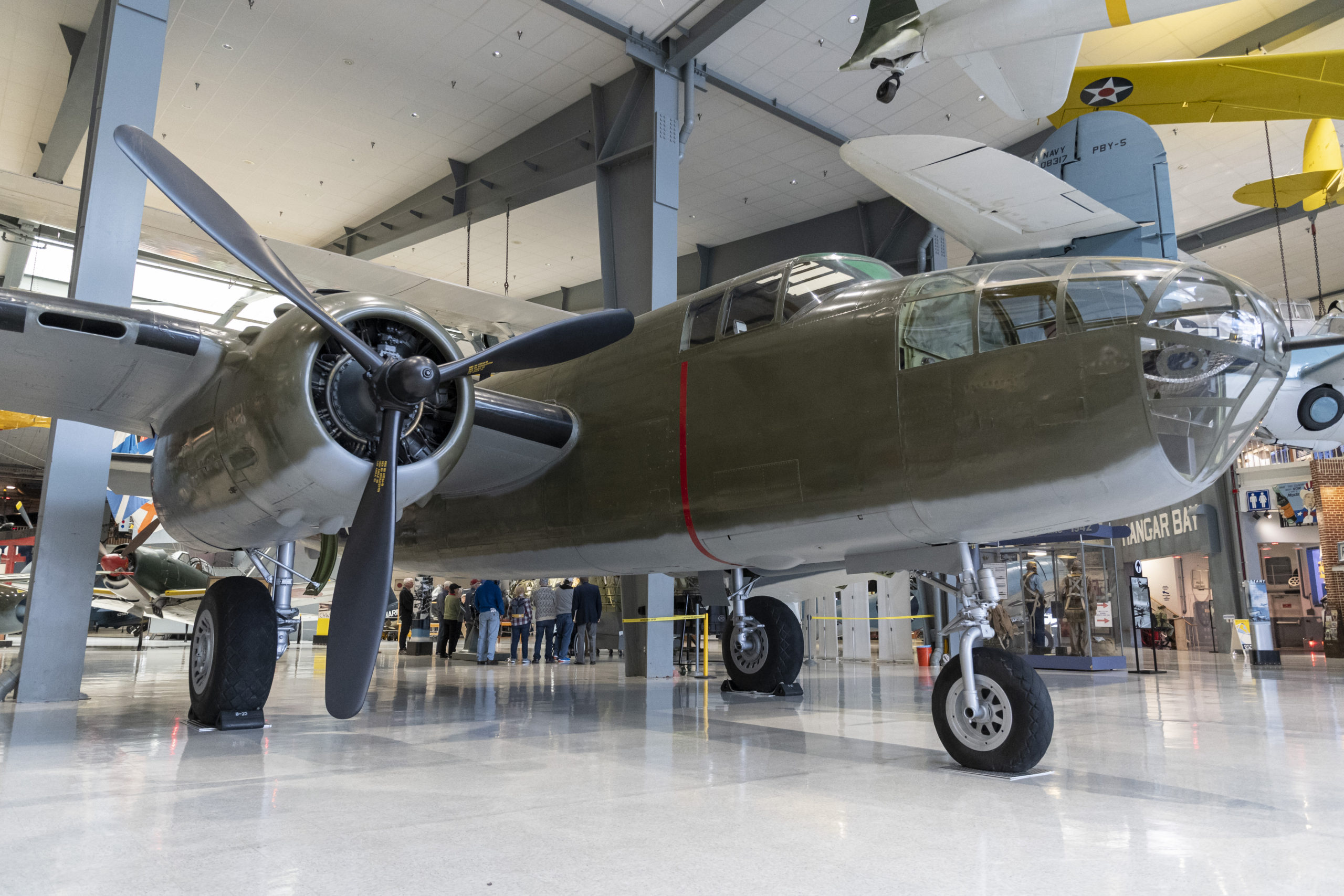
On April 18, 1942, sixteen of these Army Air Forces medium bombers flew one of the most daring missions in military history, launching from USS Hornet (CV 8) to bomb Japan.  All volunteers under the command of Lieutenant Colonel James Doolittle, the Doolittle Raiders sparked a boost in morale for the American public and proved B-25J Mitchell

PBY-5 Catalina

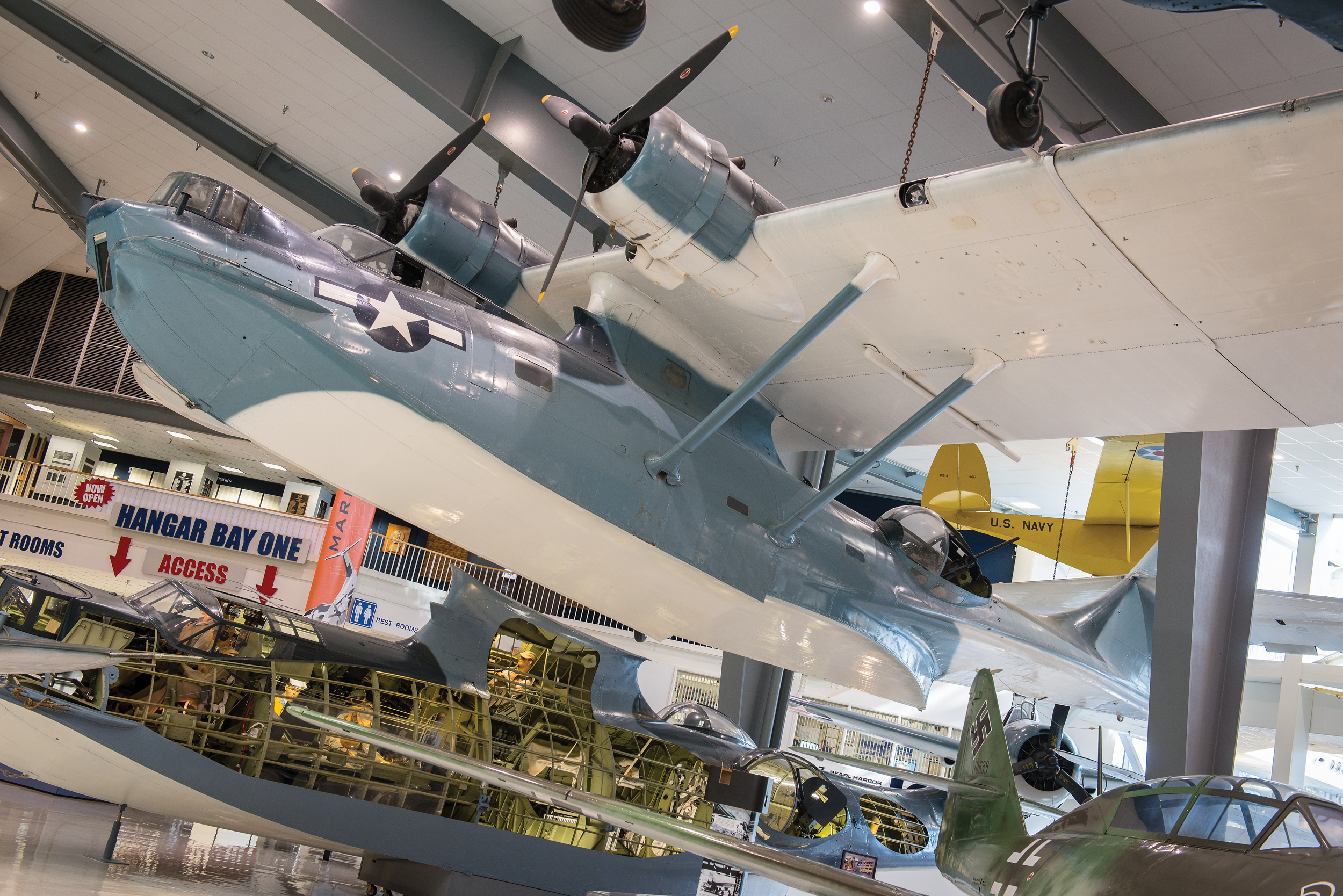
One of the most versatile aircraft of World War II, the PBY flew a range of missions, including hunting for German U-boats, low-level night attacks against Japanese positions and air-sea rescue of downed aviators.  PBYs were the aircraft that first spotted the approaching Japanese fleet during the Battle of Midway in June 1942.  In the PBY-5 Catalina

PBY Cutaway

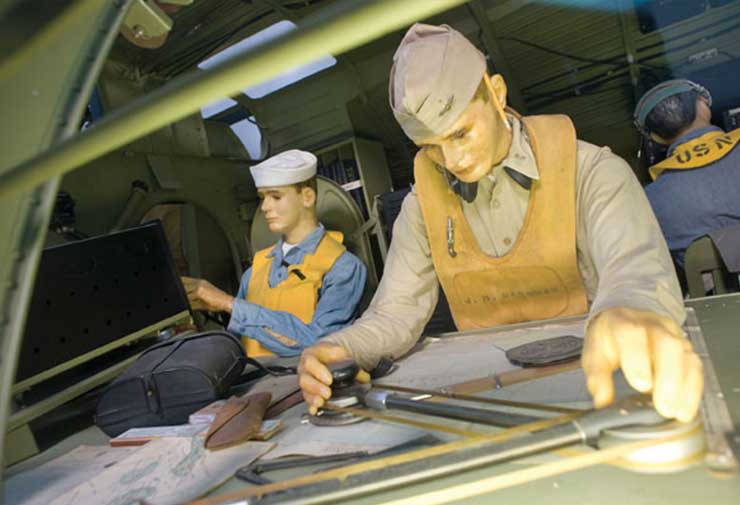
This exhibit includes the fuselage of a PBY damaged in an accident at Naval Air Station Pensacola during World War II and displayed on the base for decades afterward.  It provides a close-up look at the interior layout of the venerable flying boat and the various positions where crewmen worked to enable the airplane to PBY Cutaway