Union Jack … Stars and Stripes: Accepted on July 14, 1942, the airplane was given the designation FP-216 in lieu of a conventional bureau number assigned to most Navy aircraft because it was to have gone into British service under the Lend-Lease program. Functionally a PBY-5, it was designated a PBY-5B. The service under the Union Jack flag of Great Britain did not materialize and the airplane was one of 60 examples diverted to U.S. Navy training use. Of those, at least 20 were involved in accidents at Naval Air Stations (NAS) Pensacola, Florida, and Corpus Christi, Texas, two of the three PBY training establishments of the time (the third being at NAS Jacksonville, Florida).
Clipped Wings: On May 28, 1944, while in use for pilot and crew training in Training Squadron (VN) 8A, 8th Naval District, at NAS Pensacola, the aircraft displayed at the museum was involved in a “water loop” landing in Pensacola Bay. Of the six personnel on board, only one received minor injury. However, the incident resulted in irreparable damage to the aircraft. Towed ashore, the luckless aircraft was involved in a ground collision while on the ramp.
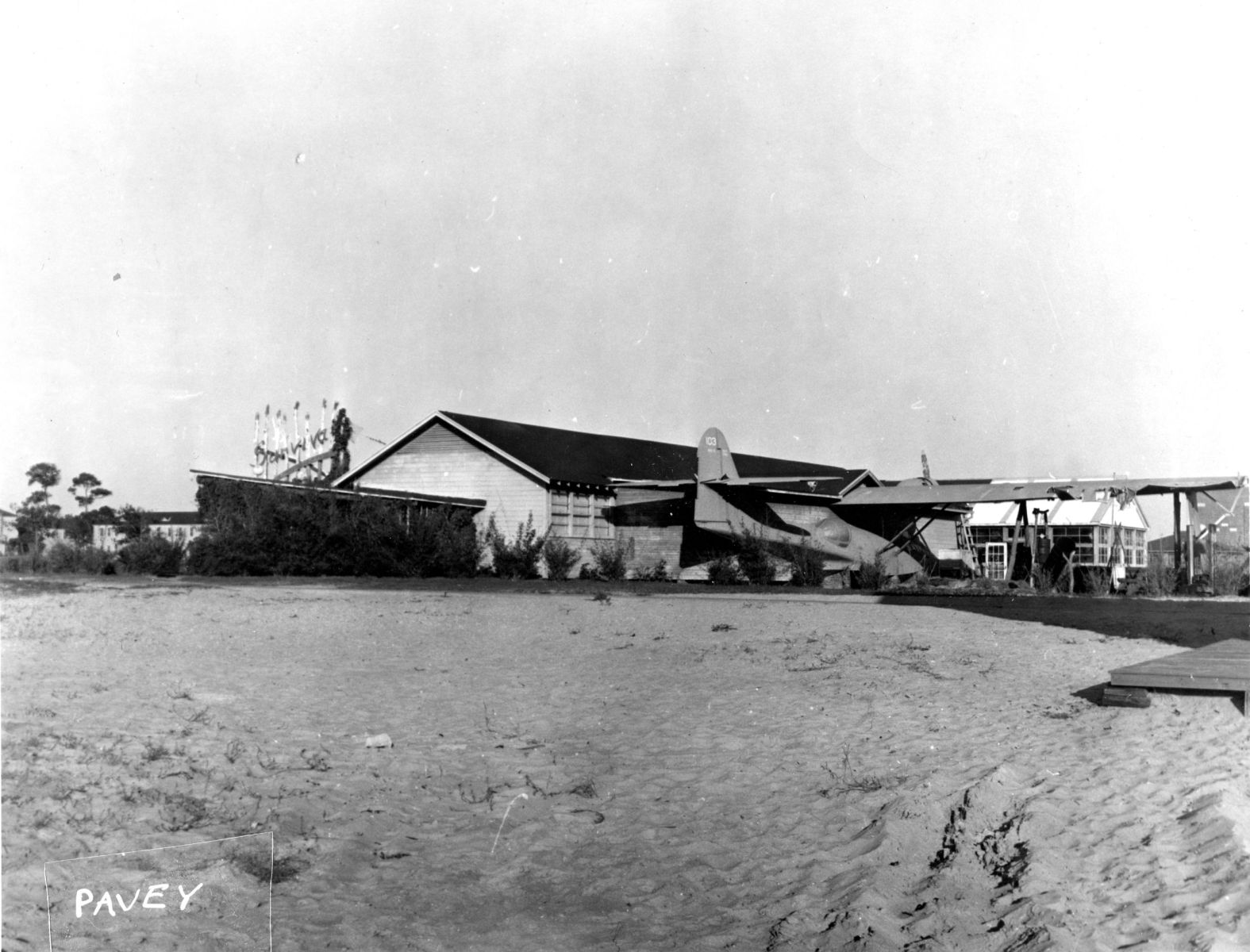
Stricken from Navy service, the airframe was subsequently installed in an outside wall of the Survival Training Center (later Land Survival Training) building on board NAS Pensacola to support instruction in sea rescue techniques, for which the PBY was famous. At that point the Catalina was positioned to form part of the back wall of the building, its port wing, port engine, and skin removed so that students could view the inner structure of the plane.
New Lease on Life: With plans to replace the training building, the future of FP-216 came under discussion as early as April 1995. Upon demolition of the training building, in 1997, museum staff members moved the airplane to a National Museum of Naval Aviation warehouse for safekeeping. In February 2001 the Catalina was shifted to the museum’s restoration hangar for preparation as a permanent exhibit.
However, many of the interior fittings and equipment had been removed, either for storage or as souvenirs. Therefore, in 2001, a major effort was mounted internationally among Catalina veterans and the general public to acquire items appropriate to the aircraft’s original operational condition to augment restoration construction and artifacts stored at the museum. Today the cutaway Catalina presents a unique viewing experience, largely complete in equipment and “manned” by a flight crew of mannequins in period uniforms.