Origins:
The Pacific Island is one of the oldest permanent exhibits in the museum. It got its start in the early 1990s as an award-winning submission in a contest at the Pensacola Interstate Fair. Given its popularity, the museum’s curator decided to keep the exhibit intact and displayed on the mezzanine in the museum’s South Wing. In 1995, it shifted to its current location as a part of an expansive exhibit on World War II funded by the Silver Eagles, an association consisting of former enlisted Naval Aviation Pilots. Since its initial inception, the exhibit has expanded in size and added additional elements.
The Exhibit:
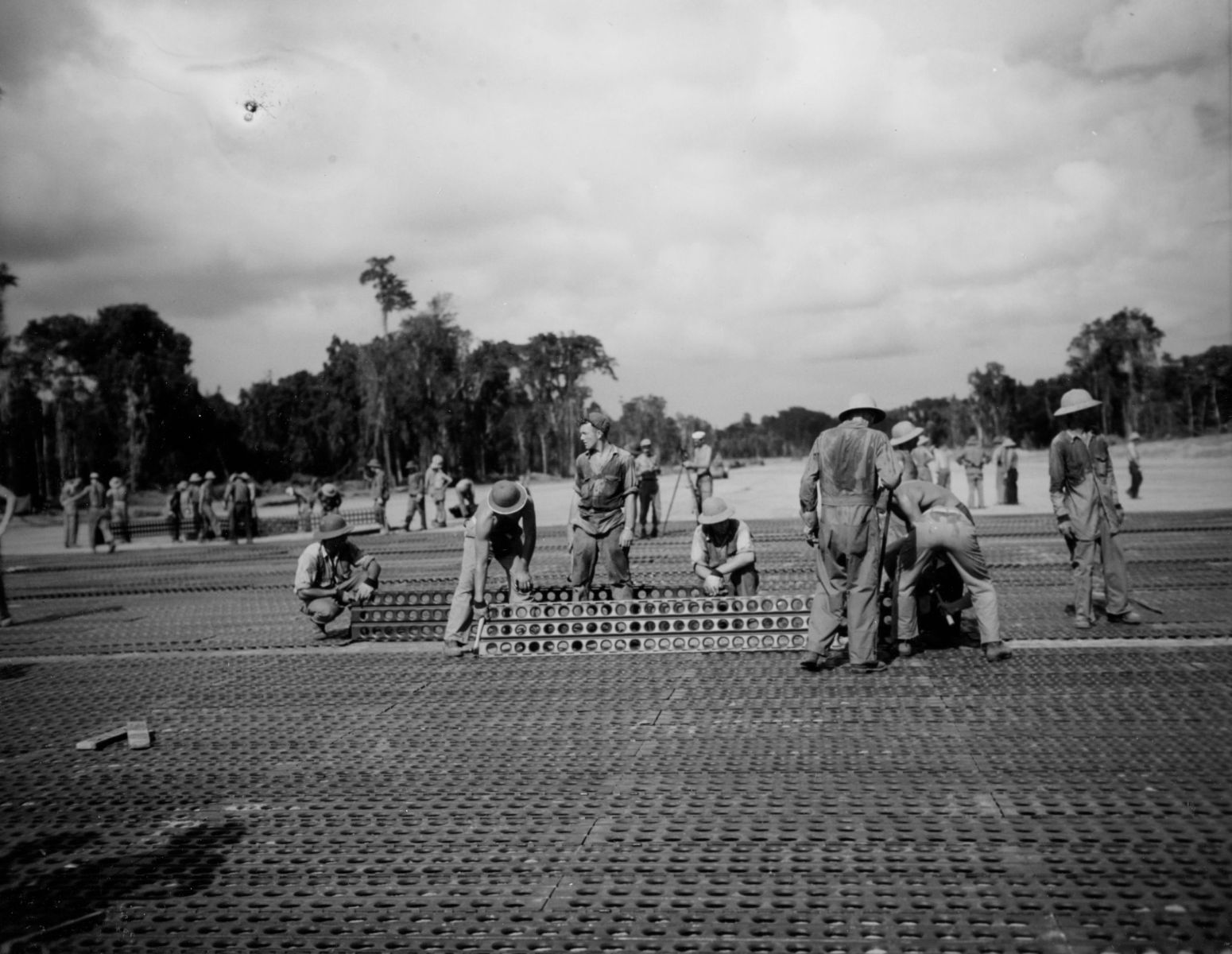
The exhibit features many components to reflect life at a rustic airfield in the Pacific Theater during World War II. The centerpiece is an FM Wildcat recovered from Lake Michigan positioned in a diorama that incorporates Marston matting and a examples of armament and ordnance. A shower fashioned from an oil barrel captures the rustic living on Pacific islands and the recreation of tent living quarters incorporates a host of period artifacts. Visitors walking up the stairs to enter the exhibit from the ground floor pass through the recreation of a sandbagged bomb shelter, a war dog serving as a squadron mascot welcoming them at the top.
Links in the Island-Hopping Chain: For Naval Aviation, the Pacific Theater was a proving ground in which the aircraft carrier came of age. However, the Allies achieved final victory only through the seizure of islands in the Central and South Pacific, the capture of each creating a network of airfields from which land-based aircraft attacked Japanese installations and bases. Whether it be those carved out of the jungles of Bougainville or the coral of Peleliu, Pacific islands complemented sea-based air power in the wide-ranging theater of war.
Perhaps the most famous of the island airfields was the one on Guadalcanal, which was christened Henderson Field after Marine Major Lofton Henderson, who was killed in action at the Battle of Midway. The invasion of the island on August 7, 1942, marked the first allied offensive of World War II, possession of the airfield a lynchpin to the ultimate victory. Aircraft operating from Henderson Field, nicknamed the “Cactus Air Force” after the codename for Guadalcanal, attacked Japanese ships at sea, battled enemy aircraft and provided close air support for Marines. Pilots and ground personnel operated while frequently under enemy bombardment, battling not only the enemy but tropical diseases and shortages of supplies.