New Exhibit Tells Naval Aerospace Medicine Story

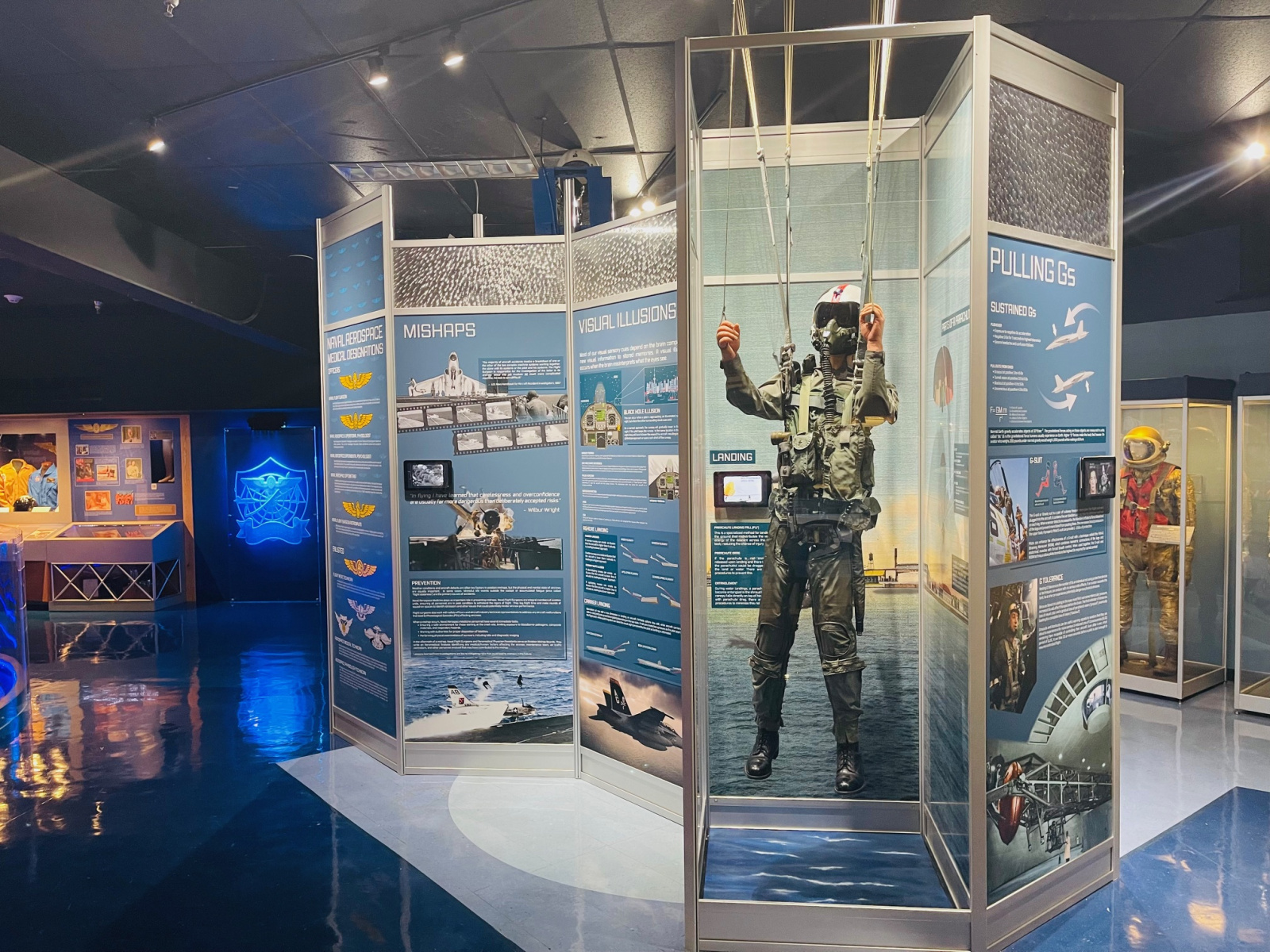
On Tuesday, October 29, 2024, nearly 150 people, including both active duty and retired military personnel, assembled at the National Naval Aviation Museum to open a new exhibit devoted to the history and current role of aerospace medicine in support of Naval Aviation. As Museum Director CAPT Sterling Gilliam, USN( (Ret.) stated in his opening remarks, while “NAS Pensacola is know as the ‘Cradle of Naval Aviation,’ it is also the ancestral home of naval aerospace medicine.” The new exhibit speaks to that history with a timeline of events beginning with the assignment of the first Navy physicians for training in aviation medicine in 1922 (ironically, they received instruction from the Army) to the modern age. Notable artifacts featured in the historical section include medical devices that belonged to CAPT Robert Mitchell, MC, USN, who founded the ongoing study of former prisoners of war. Also displayed is the NASA flight jacket that belonged to CAPT Joseph C. Kerwin, MC, USN (Ret.), the first flight surgeon in space. The Skylab II command module in which he flew is exhibited nearby courtesy of the Smithsonian National Air and Space Museum. CAPT Kerwin taped a special message that was part of the program for the exhibit opening.
The exhibit also touches on the operational aspects of Naval Aerospace Medicine in the fleet. Visitors can step up to interactive touchscreen kiosks to test their vision and hearing and learn if they are “fit to fly.” An example of the famous “Dilbert Dunker” introduces naval aerospace medicine’s role in water survival training and graphics panels cover an array of other subjects to include the psychological and physiological aspects of flying.