Museum’s Historic C-130 Hercules Gets a Facelift
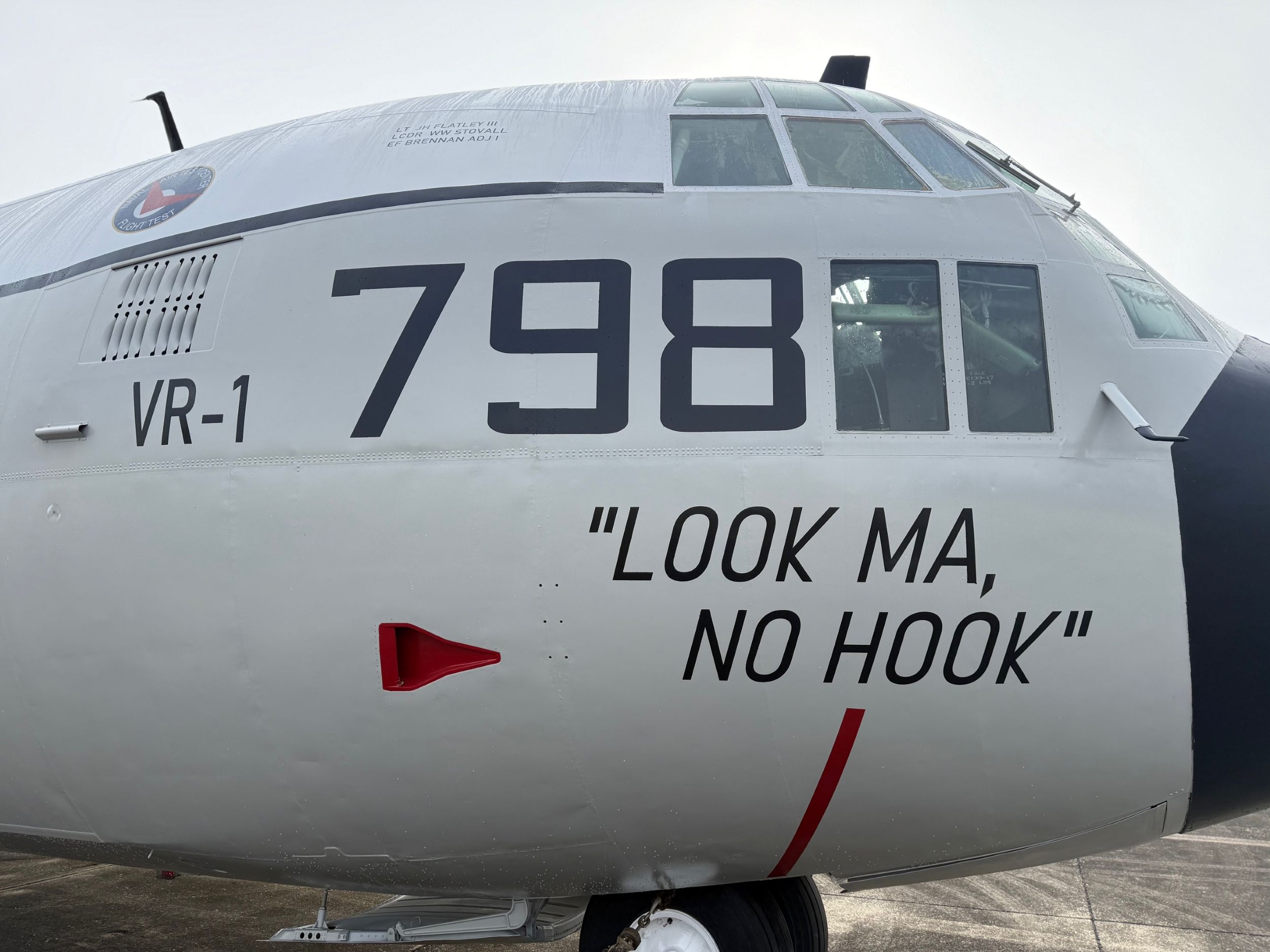
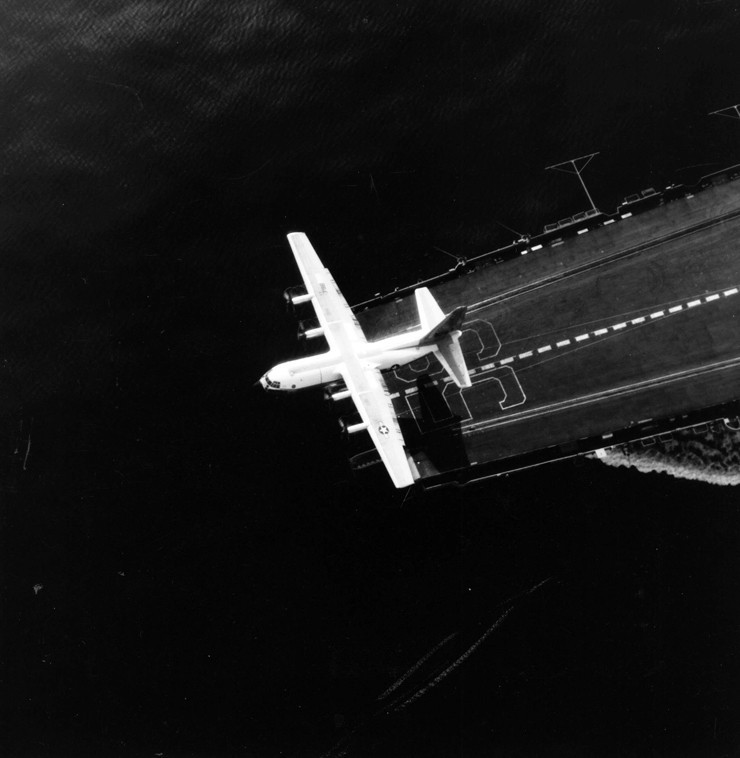
An iconic aircraft in the history of the U.S. Navy received some much-needed tender loving care this fall. Through the generous support of the Naval Aviation Museum Foundation, contractors from Blast Off, Inc., performed corrosion control and repainting of KC-130F Hercules, Bureau Number (BuNo) 149798. The airplane made its final flight to NAS Pensacola on 1 March 2005, wearing the tactical paint scheme of its final squadron, the VMGR-352 Raiders. It is now displayed in the livery it wore in 1963 when it performed carrier suitability tests on board USS Forrestal (CVA 59).
Accepted by the Navy on May 1, 1962, the airplane was assigned to VR-1 the following year for a special assignment. LT James H. Flatley III, a pilot in the Flight Test Division of the Naval Air Test Center on board NAS Patuxent River, MD, recalled all hands doing a double take when told they were to evaluate the feasibility of operating the four-engine transport weighing nearly 75,000 pounds with a wingspan of nearly 133 feet on board an aircraft carrier.
In preparation for the trials, maintainers removed the aerial refueling equipment from the airplane and replaced the existing anti-skid braking system with that used on Boeing 727 airliners. Determining it was easier to train experienced carrier pilots to fly the “Herk” than the other way around, Flatley (pilot) and LCDR Walter W. Stovall (copilot) received instruction on the C-130 with ADR1 Ed Brennan of VR-1 rounding out the crew as flight engineer.
Field carrier landing practice focused on keeping the sink speed within limits on approach, reversing engines while airborne just before touchdown, and determining proper flap settings for takeoffs.
On October 30, 1963, just three weeks after receiving the airplane, the crew completed the first trials on board Forrestal, initially focusing on how aircraft carrier airflow disturbances affected aircraft control. Subsequent trials gauged the distances required to land and take off at various weights. All told, Flatley completed 29 touch-go-landings and 21 full-stop landings and deck launches during a total of four days at sea. With a weight of 121,000 pounds, it took 495 feet to bring the KC-130F to a stop and at that weight it took 795 feet to get airborne. The Navy concluded that it was feasible to operate the airplane from a carrier carrying 25,000 pounds of cargo, operating the Hercules aboard ship was too risky.
Following these historic flights, BuNo 149798 began more than four decades of service with the Marine Corps. This included time with VMGR-252 Otis, which included combat operations during the Vietnam War, and service with the VMGR-152 Sumos in Japan. In 1990, the airplane joined VMGR-352 and during its time in the squadron it supported Operations Desert Storm and Enduring Freedom.
Flatley, who eventually retired as a rear admiral, was able to photographs of the preserved airplane in which he made history before he passed away on December 12, 2025, at the age of 91.