Hangar Bay One Archives - Page 2 of 3 - NNAM

Category: Hangar Bay One

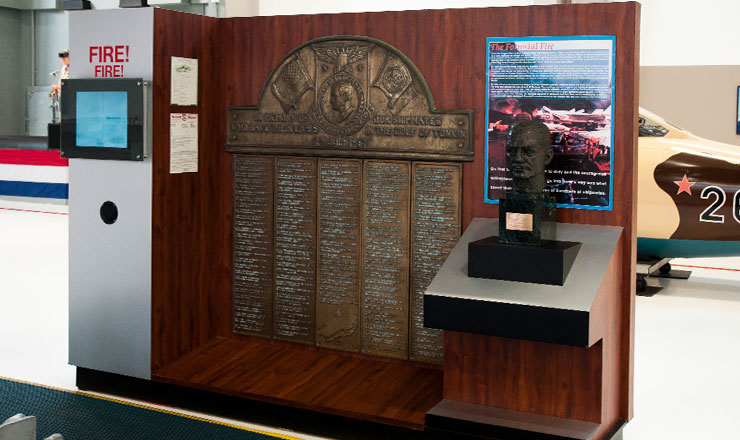
The Forrestal Fire

Fire is one of the greatest calamities that can occur aboard ship.  On July 29, 1967, during flight operations on board USS Forrestal (CVA 59), a rocket accidentally launched from an aircraft on the flight deck and ignited a fuel tank on another airplane.  The resulting conflagration killed 134 Sailors and injured 161 others while The Forrestal Fire

R4D-5L Skytrain

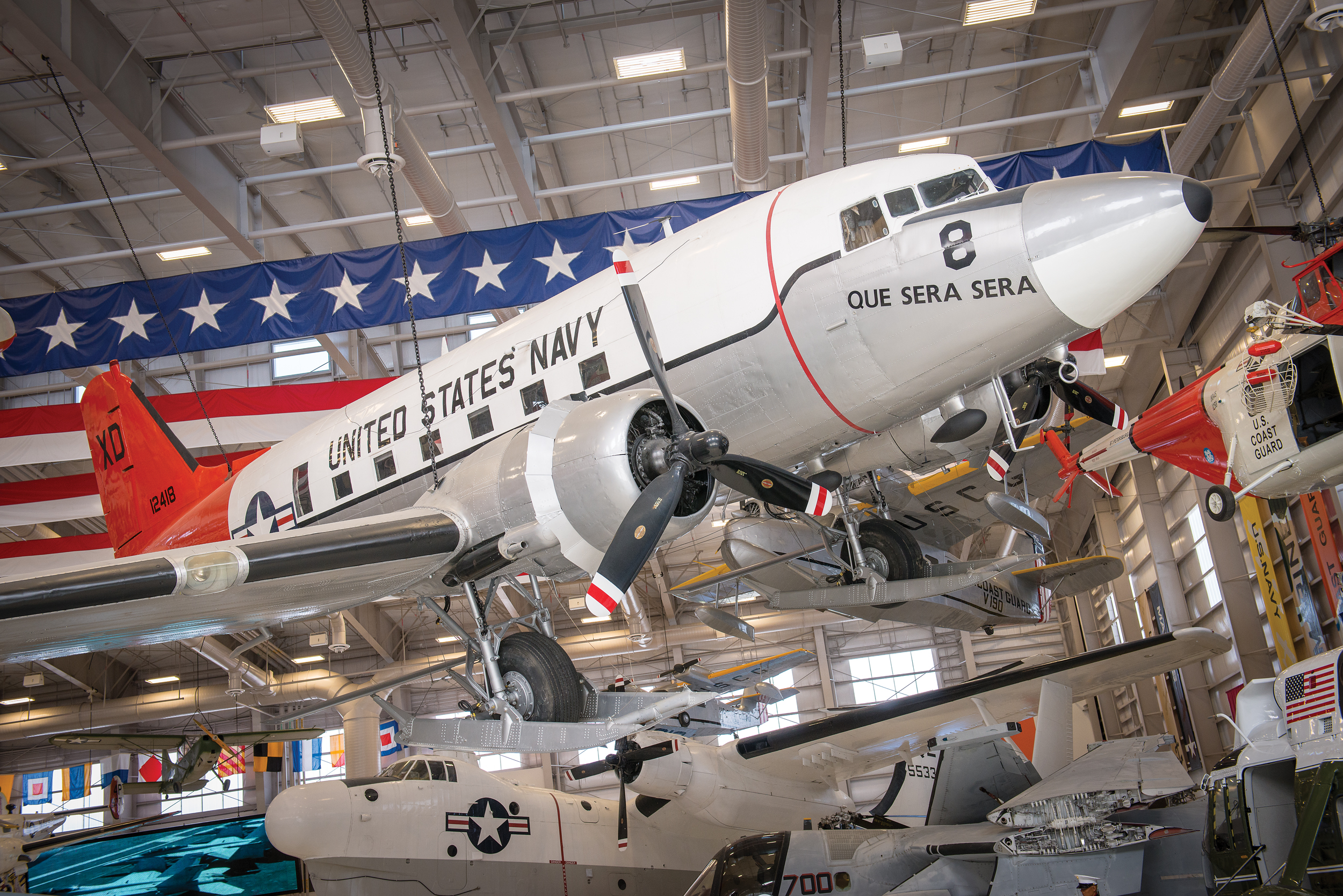
A unique version of the C-47 Skytrain that dropped paratroopers into Normandy during the D-Day invasion, the museum’s R4D-5L is the famous “Que Sera Sera.”  Its landing gear fitted with skis, it made the first landing by an airplane at the South Pole on October 31, 1956.  Another Naval Aviator, Rear Admiral Richard Byrd, and R4D-5L Skytrain

P2V-1 Neptune

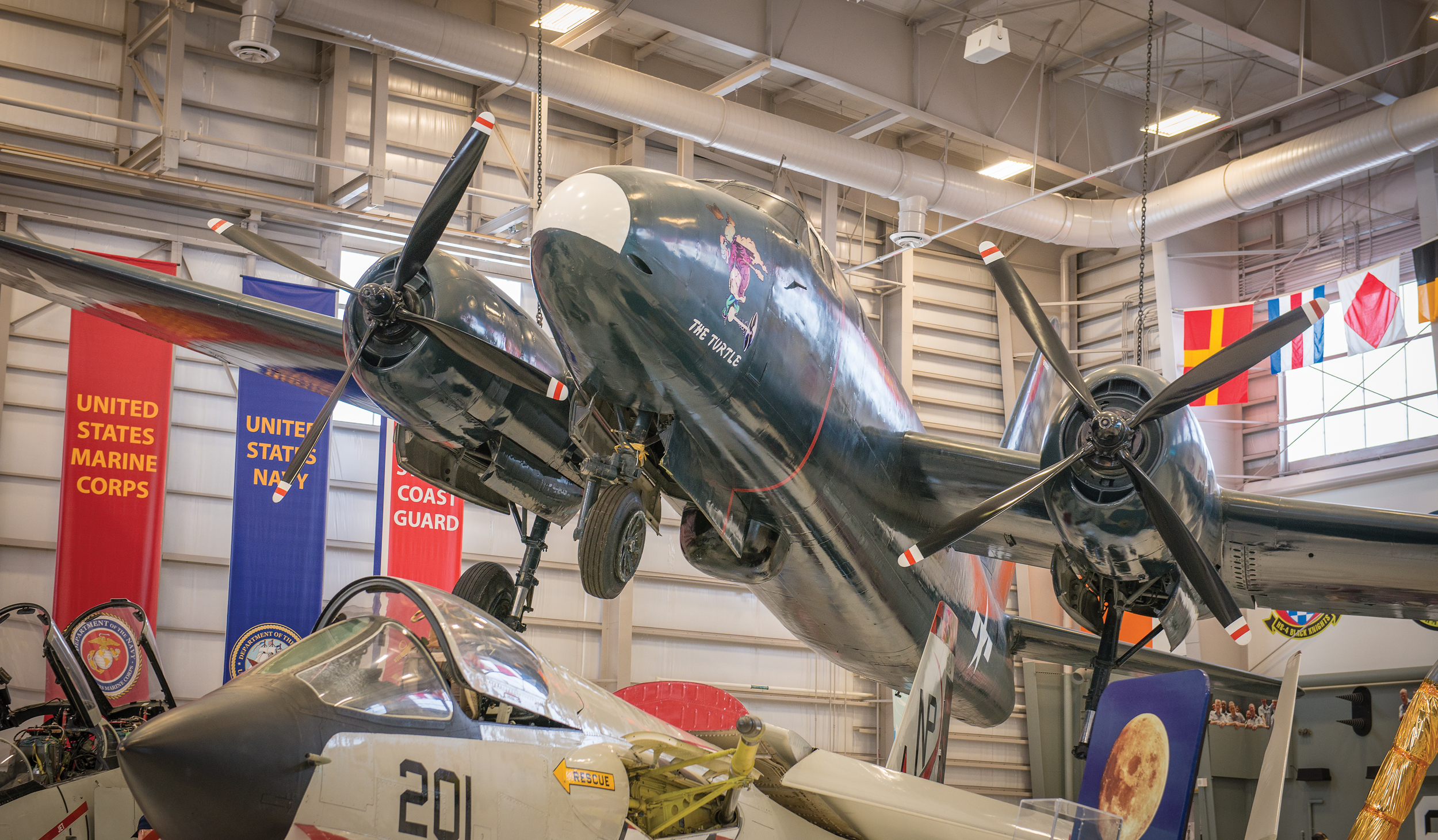
With the advent of nuclear weapons, the Navy evaluated the abilities of its newest aircraft and their crews to perform long-range missions.  Nicknamed the “Truculent Turtle” in the tradition of the old fable The Tortoise and the Hare, the P2V-1 Neptune on display was slow but steady in establishing a world record for long-distance unrefueled P2V-1 Neptune

Lunar Module

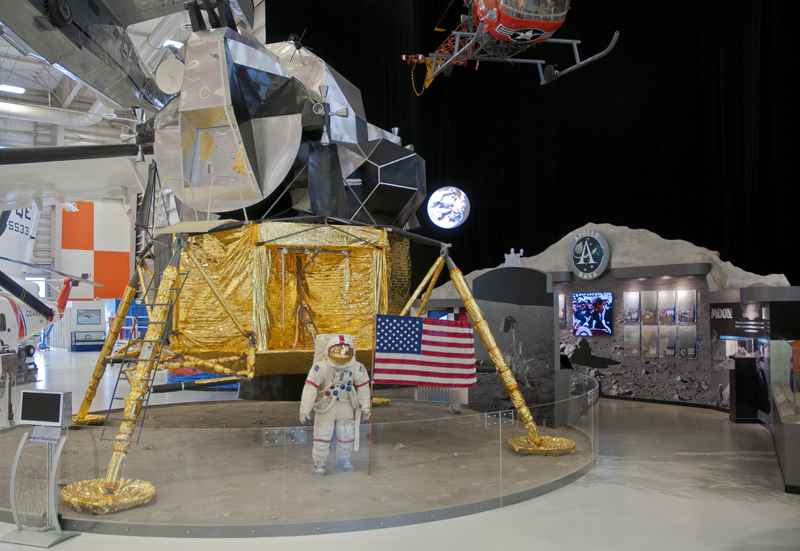
A replica of the Lunar Module, the spider-like spacecraft that carried the astronauts to the lunar surface, is the centerpiece of the museum’s exhibit devoted to the Apollo program. Also on display is an example of the boilerplate capsules used by the Navy to practice spacecraft recovery after splashdown and details about the specific American Lunar Module

RD-4 Dolphin

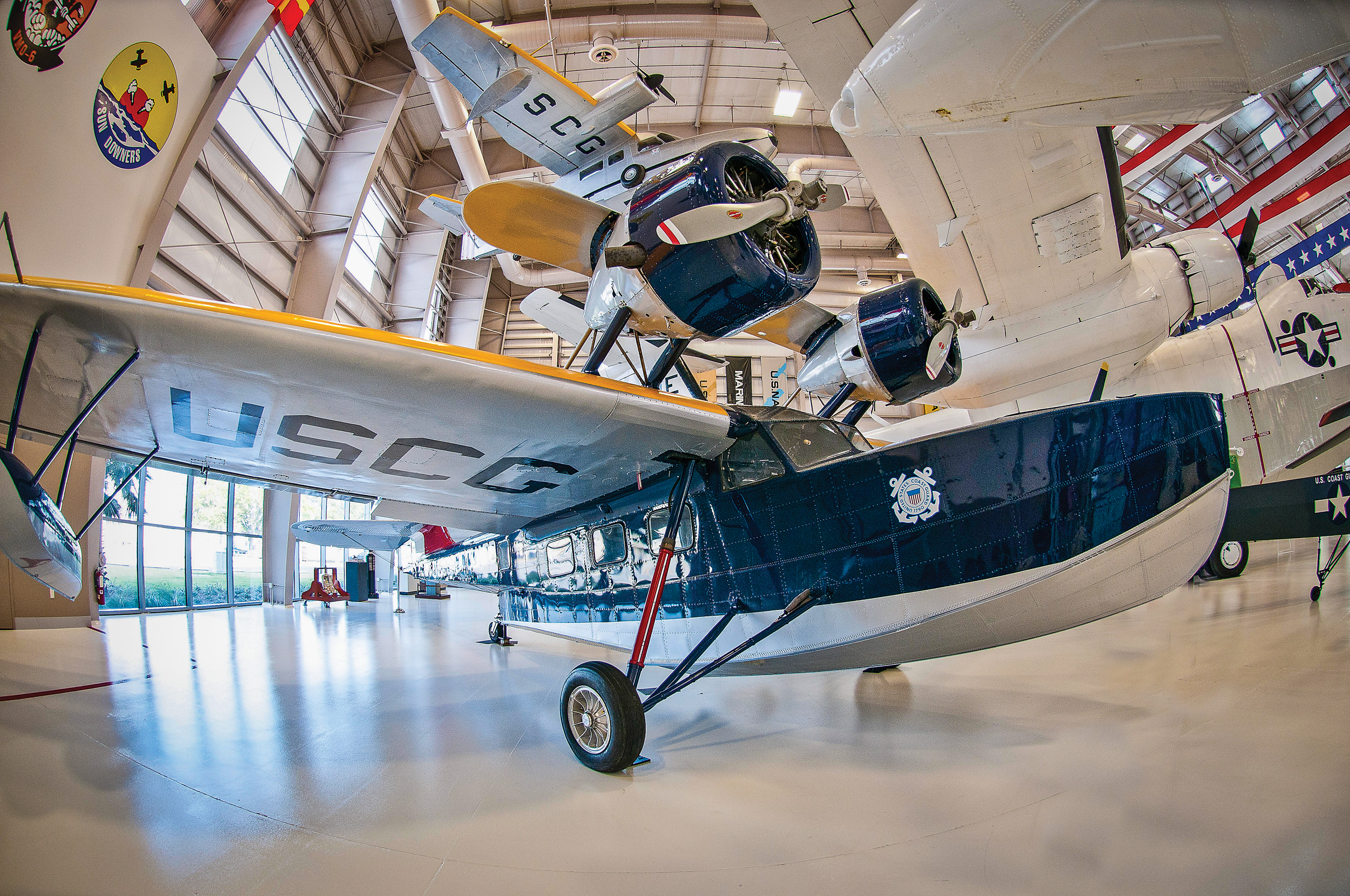
U.S. military purchasers of the airplane, originally built as an “air yacht” for the commercial market, included the Navy, Army Air Corps and Coast Guard, the latter service procuring 13 of the airplanes and naming each of them after a star (i.e. Rigel, Vega).  In Coast Guard service, the planes flew primarily in the search RD-4 Dolphin

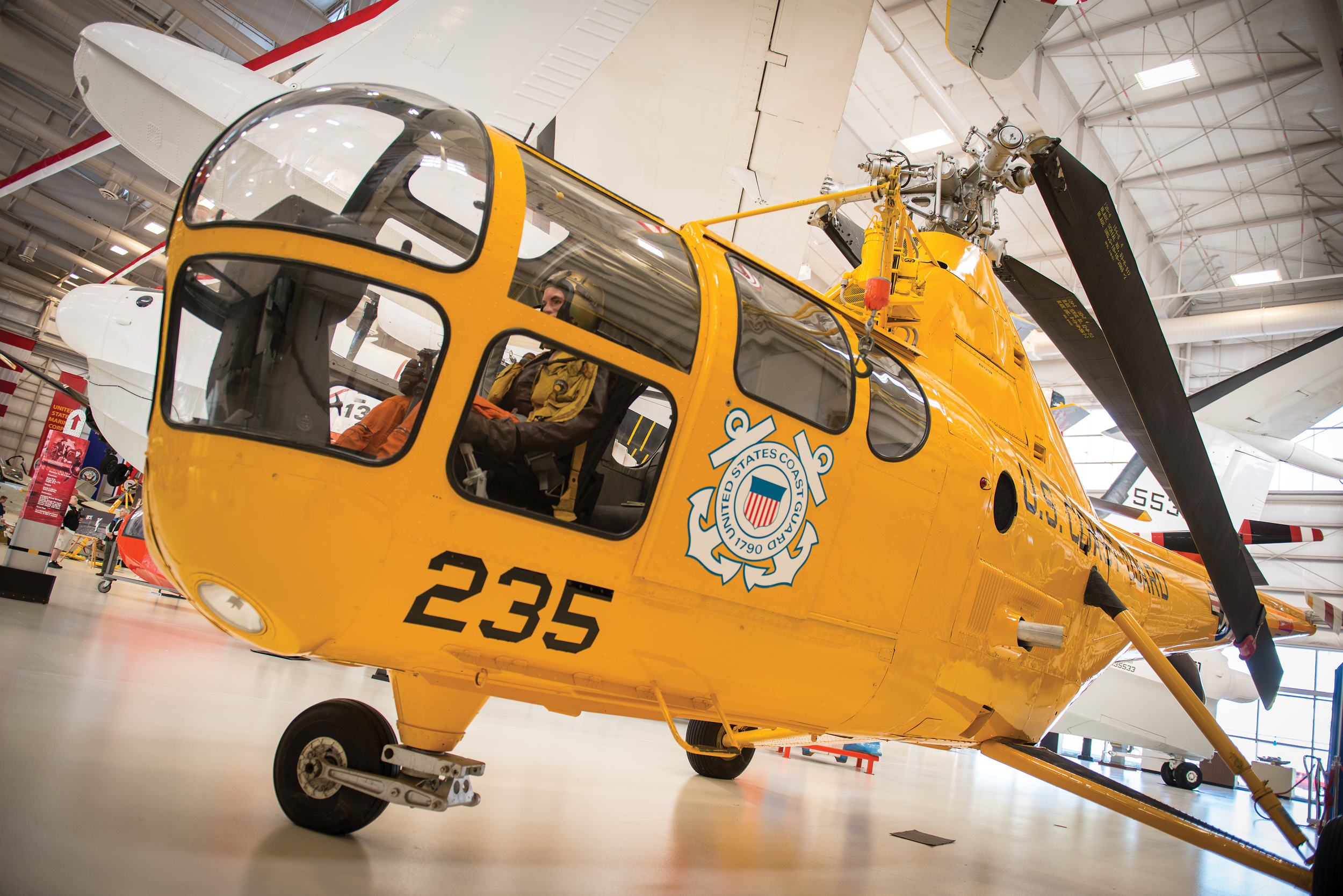
HO3S-1G

The museum aircraft entered service in 1950 and flew entirely with the Coast Guard, including a September 4, 1951, mission in which the pilot deployed its flotation bags to land in the Atlantic Ocean to pull an Air Force pilot from the water after he parachuted from his plane.  The original purchase price for an HO3S-1G

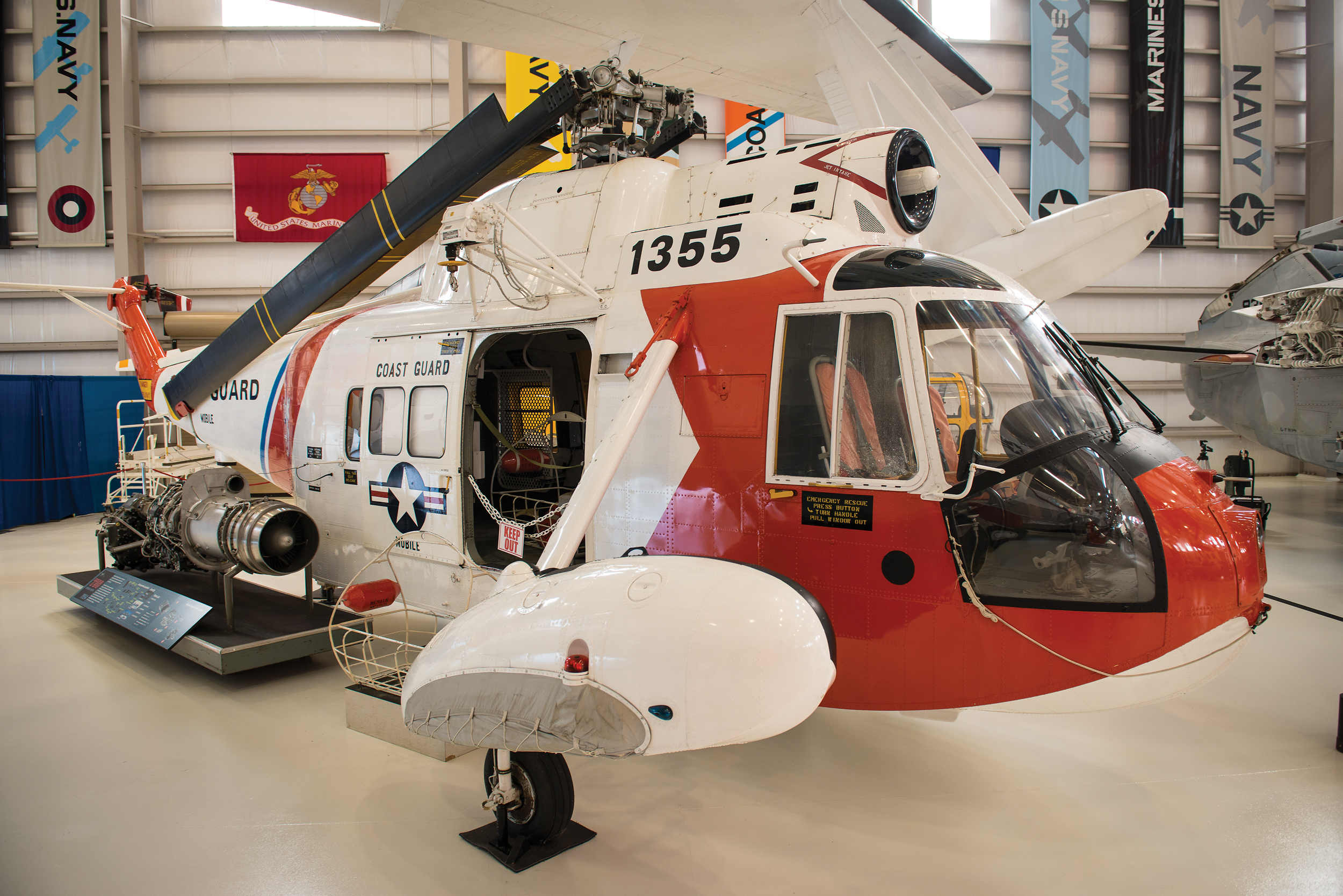
HH-52A Sea Guard

The HH-52 took helicopter search and rescue to a new level when delivered in 1963.  With its watertight hull and stabilizing floats on each side of the fuselage, the Sea Guard could land on water or an ice cap to assist those in distress as well as pull them to safety using a rescue hoist.  HH-52A Sea Guard

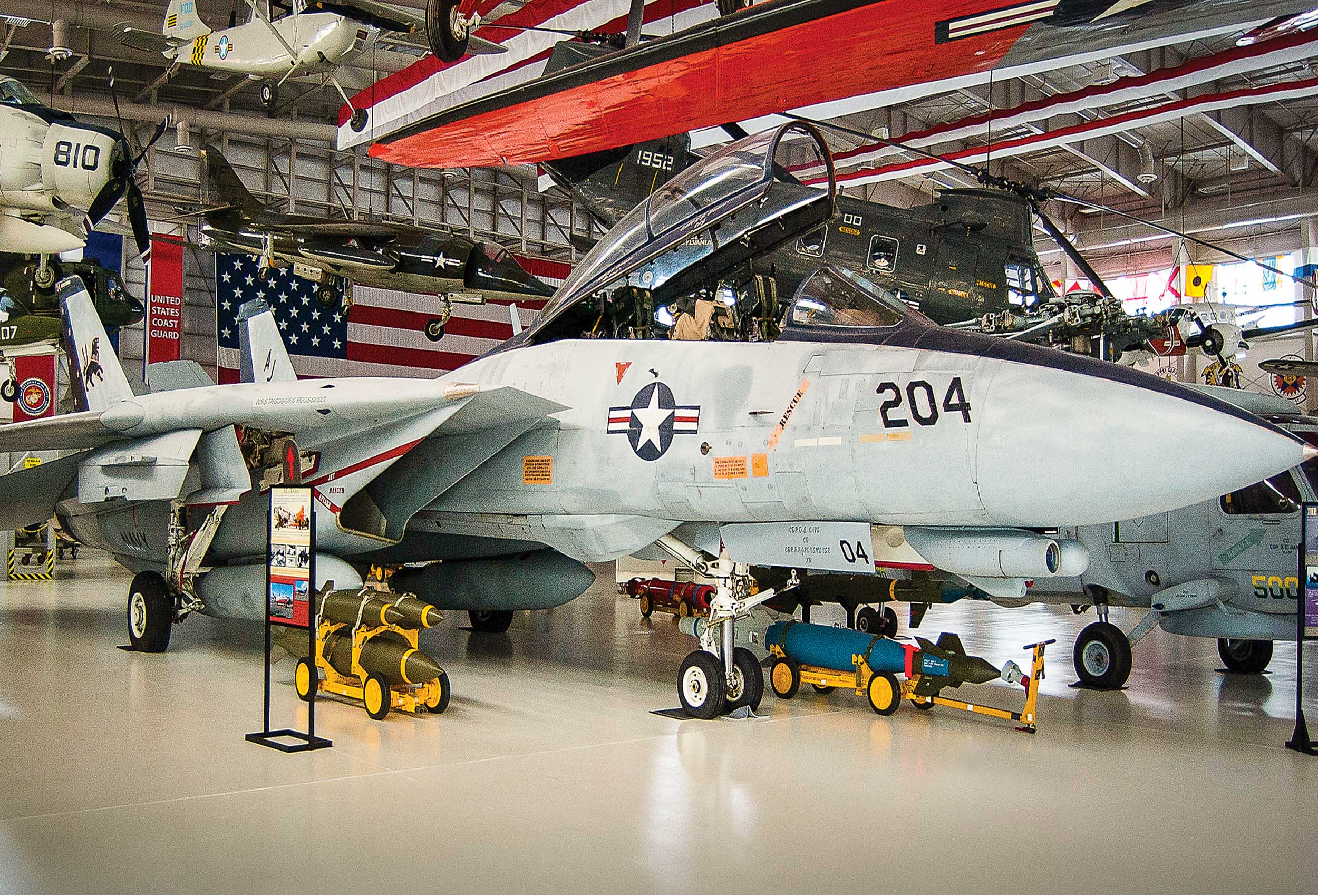
F-14D Tomcat

Known in Naval Aviation circles as the “Big Fighter,” the F-14 featured a unique variable sweep wing that automatically shifted in flight from 28 to 60 degrees sweep for optimum performance at any speed.  The Tomcat made headlines during the 1980s in air-to-air engagements with Libyan fighters over the Gulf of Sidra.  The aircraft on F-14D Tomcat

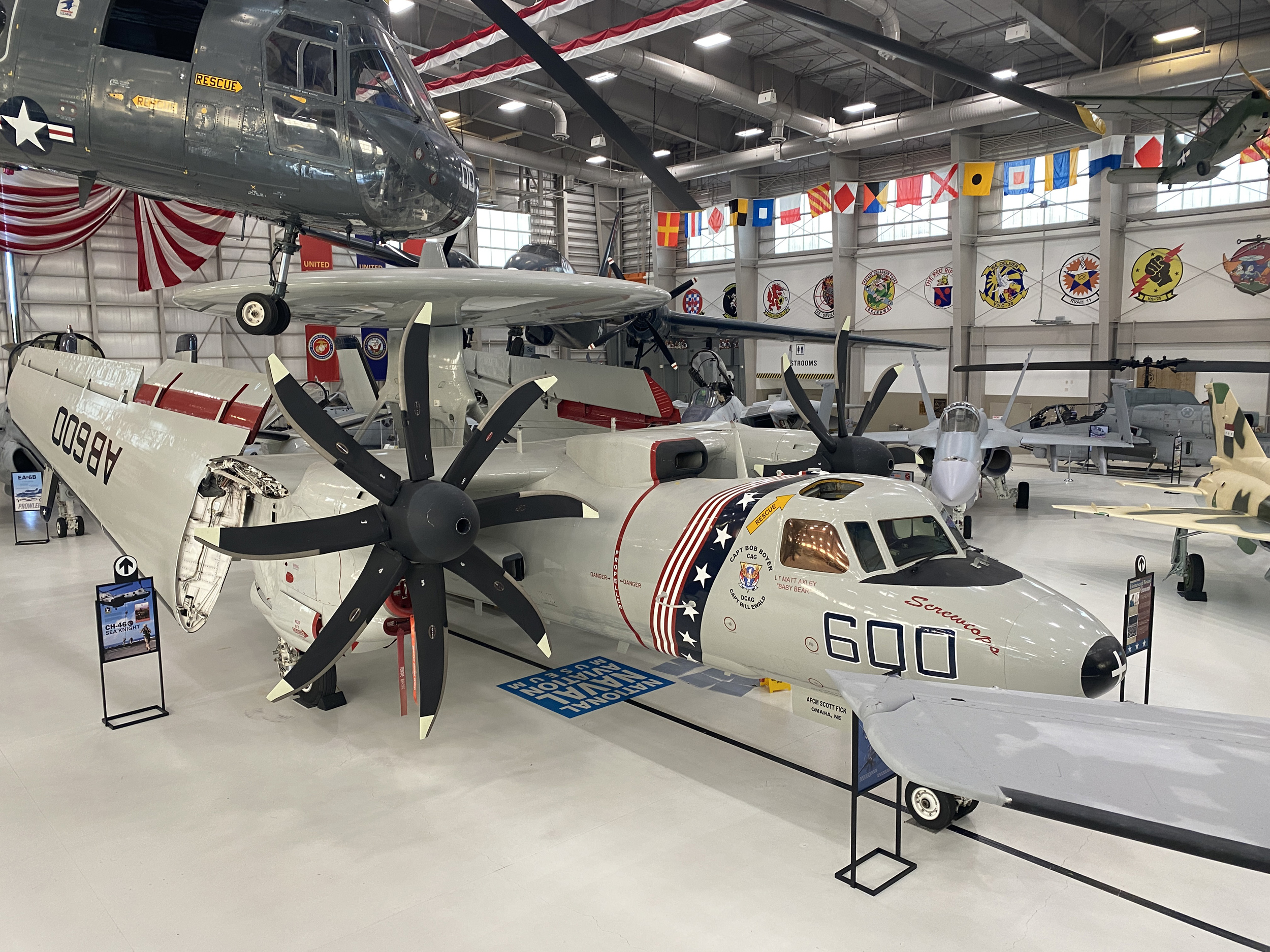
E-2C Hawkeye

The aircraft carrier’s command and control platform, the Hawkeye has the distinctive feature of a 24-foot diameter circular rotating radar dome atop the fuselage.  The airplane was once nicknamed the “Hummer” because of the noise its four-bladed props made.  The eight-bladed props visible on the museum’s airplane, which create a sound akin to a swarm E-2C Hawkeye

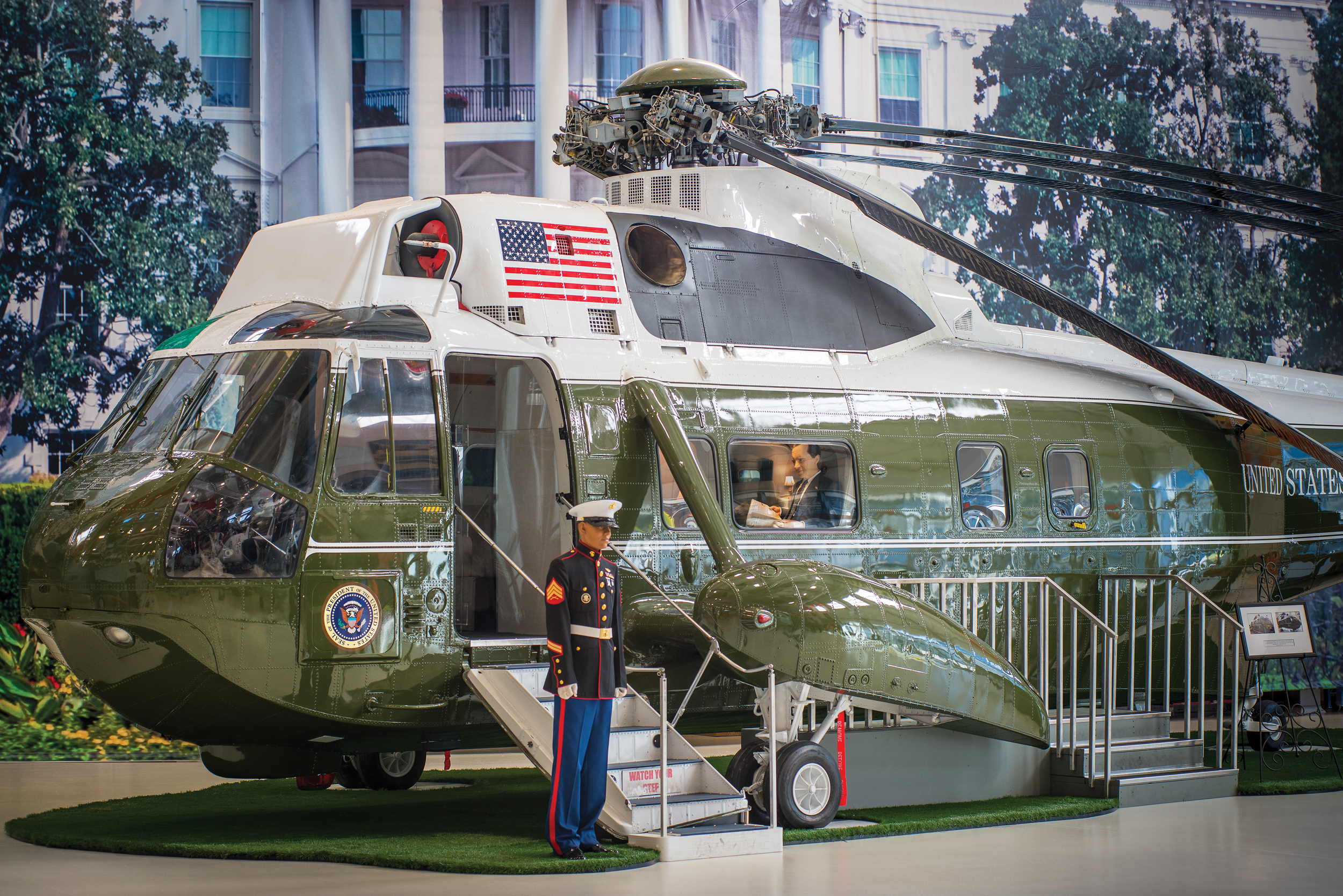
VH-3A Sea King

Delivered to the fleet in 1962, the VH-3A on display served in the Executive Flight Detachment of Marine Helicopter Squadron (HMX) 1 during the presidencies of Richard M. Nixon and Gerald R. Ford.  No single helicopter is called “Marine One,” with any one of HMX-1’s aircraft assuming that name when the President is on board.  VH-3A Sea King