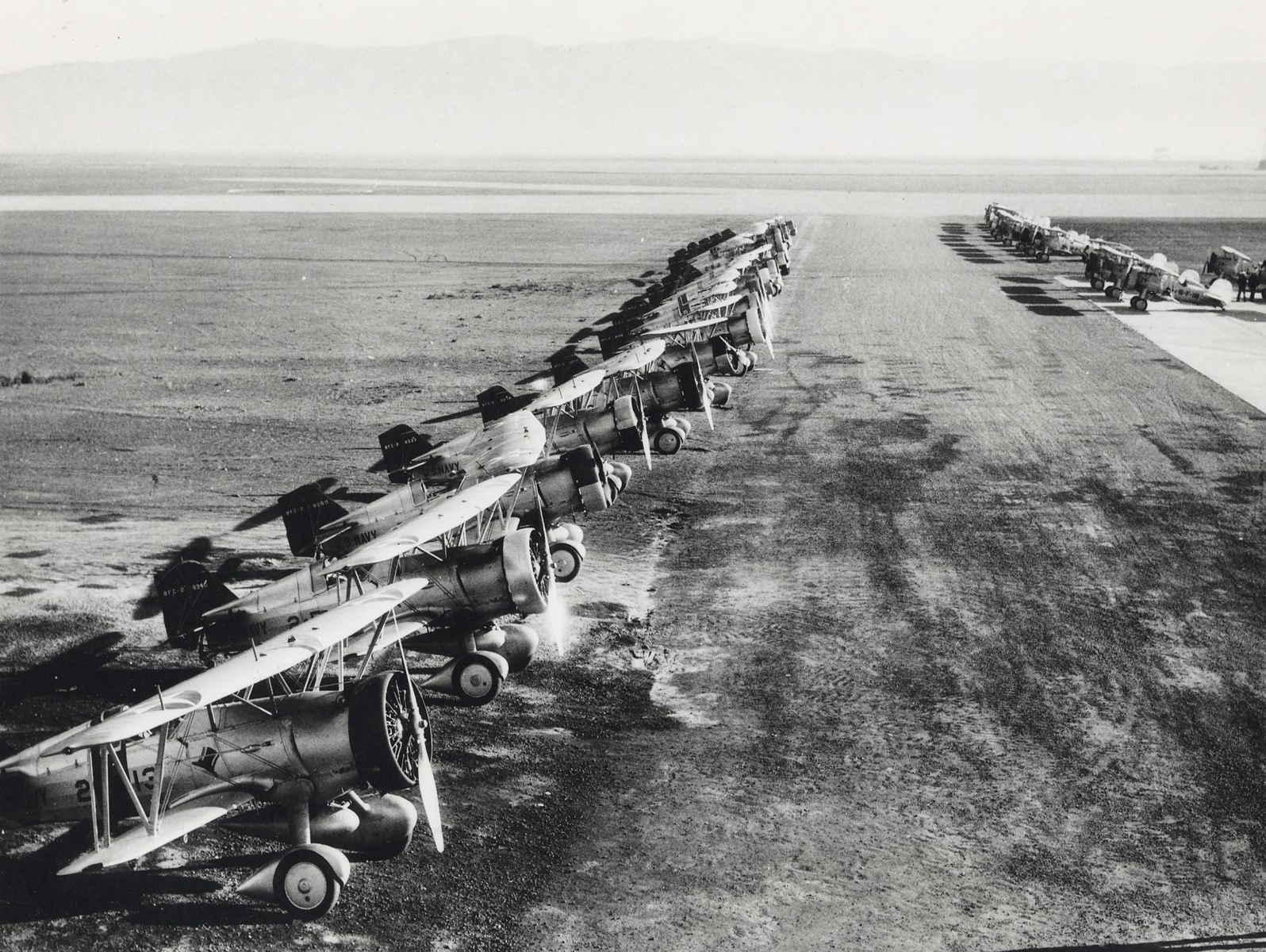
First Flight:
The F11C (later redesignated BFC) Goshawk’s first flight occurred on March 20, 1932.
Multi-mission:
The initial designation for the Goshawk was the F11C, which reflected its intended mission as a fighter. However, the Navy soon redesignated the airplane as the BFC, which in the service’s aircraft designation convention of the period meant “Bombing Fighting Curtiss.” Thus, the Goshawk was one of Naval Aviation’s early multi-mission airplanes.
Design:
The BFC-2 was designed to execute the tactic of dive bombing, during which pilots put the aircraft into a dive and plummeted down to around 1,500 feet in altitude to release ordnance. This was more accurate than high-altitude bombing when attacking a moving target like a ship. The Goshawk therefore featured a bomb cradle on the fuselage centerline that swung the bomb away from the airplane when in a dive, preventing the ordnance from hitting the propeller.
Service:
Only produced in small numbers, the BFC-2 was delivered to one of the most famous squadrons in Naval Aviation history, the Bombing Squadron (VB) 2B (later redesignated Fighting Squadron (VF) 1B) High Hats, in 1933. Operating continuously since 1919, the squadron now flies F/A-18 Super Hornets and is known as the Tophatters.
The Museum’s Aircraft:
The original components incorporated into the museum’s aircraft are from BFC-2 Goshawk (Bureau Number 9332), which was built at the Curtiss-Wright facility in Buffalo, NY, and delivered to the Navy on April 13, 1933. Arriving at San Diego on April 27th, its first assignment was to Battle Force (Pacific Fleet) at North Island. In July, it was assigned to VF-1B. By June 1938 it was noted as having “General wear incident to service…” with a recommendation to strike it from service.